
Every police officer has heard it at least once, usually from a driver who has had far too much to drink: “Do you know who I am?” One of the most popular versions of this story takes place on the Harbor Freeway in Los Angeles at 3:30 in the morning. It has been passed around for years among cops and on the internet, and it still gets a laugh because it captures something every officer knows. The law is supposed to apply to everyone, no matter who they are.
Here is the story, a word of caution about where it came from, and some real history about the freeway, the officers who patrol it and the fight against drunk driving.

The Story: 3:30 AM on the Harbor Freeway
As the officer tells it, he pulled over a car that was weaving across the lanes of the Harbor Freeway in the middle of the night. The conversation went something like this:
Driver: “Do you know who I am?”
Officer: “No.”
Driver: “Do YOU know who I am?”
Officer: “No.”
Driver: “I’m going to tell you who I am.”
Officer: “Please don’t. Please step out of the car.”
Driver: “You can’t make me!”
Officer: “You’re right, I can’t make you step out of the car. But I can help you out. Please step out of the car.”
Driver: “Do you have any idea what I’ll do? I’ll have your badge!”
Officer: “Sir, you don’t need mine. You could get one of your own if you went to the police academy. Please step out of the car.”
When the driver finally climbed out, he fell straight to the pavement. A test showed a blood alcohol level of 0.19, more than twice the legal limit. The officer booked him for driving under the influence. In the best-known version of the story, the officer’s captain later told him the man was a big-city mayor from the area, and the officer had to testify in court. The driver was convicted, lost his license, paid a heavy fine and went to rehab.
A Word of Caution: Is the Story True?
We love this story, but we have not been able to confirm it. We could not find a news report, court record or named officer behind it, and it circulates online in several slightly different versions. That is usually the sign of a tall tale that has been retold and polished over the years. So enjoy it as a classic police story, not as a news report about any real official.
What is true is the lesson. Real officers across the country have been told “Do you know who I am?” by drivers who believed their job or connections would get them out of a ticket. When the officer treats them like anyone else, it is a small but important victory for equal justice under the law.
The Harbor Freeway: A Los Angeles Landmark
The Harbor Freeway is a real and very busy road. It runs from San Pedro and the Port of Los Angeles north to the Four Level Interchange in downtown Los Angeles, where it meets U.S. 101. South of Interstate 10 it is signed as Interstate 110, and north of downtown it continues as State Route 110 toward Pasadena on the historic Arroyo Seco Parkway, often called the first freeway in the West.
The first section of the Harbor Freeway opened on July 30, 1952, running from the Four Level Interchange south to 3rd Street. It was extended in pieces over the next two decades. The final section in San Pedro, connecting to the Vincent Thomas Bridge, opened on July 9, 1970. Today its median carries the Harbor Transitway, an express lane system for buses and toll-paying drivers.
Who Patrols the Freeways?
In California, most freeway traffic enforcement is handled by the California Highway Patrol. The CHP was created by an act of the state legislature on August 14, 1929, and given statewide authority to enforce traffic laws on county and state highways. In 1995 it merged with the California State Police and took on new duties, including protecting state property, the governor and other officials. Local departments such as the LAPD and the Long Beach Police Department handle the city streets around those freeways.
The Fight Against Drunk Driving
Stories like this one are funny because nobody got hurt. Too often, drunk driving ends in tragedy, which is why officers take every stop seriously. California lowered its legal blood alcohol limit for drivers from 0.10 to 0.08 effective January 1, 1990, one of the first states to do so. Over the next decade, other states followed, and 0.08 became the national standard. A reading of 0.19, like the one in the story, is well into the range where judgment, balance and reaction time are badly impaired.
Every officer who pulls a drunk driver off the road at 3:30 in the morning may be saving a life, perhaps a family heading home from a late shift, perhaps the drunk driver’s own. For another story about an ordinary American stepping up when it counted, read MMA-Trained Gas Station Clerk Stops a Houston Robbery.
Honoring the Men and Women Who Serve
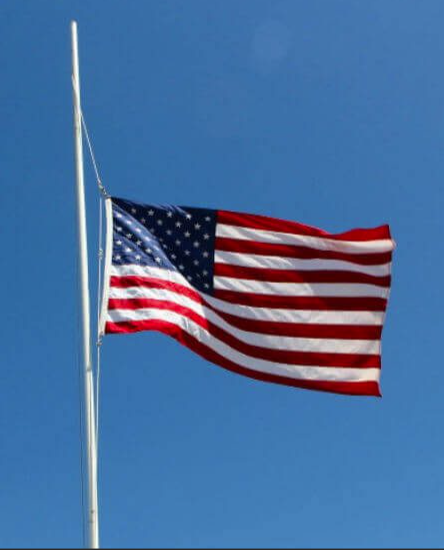
Every year, Americans set aside time to thank the officers who keep our communities safe. In 1962, President John F. Kennedy proclaimed May 15 as Peace Officers Memorial Day and the week around it as National Police Week. Since a 1994 change in federal law, the U.S. flag is flown at half-staff on May 15 to honor officers who died in the line of duty. You can learn more about half-staff days in our guide, How to Display the American Flag.
So the next time you see a police officer, firefighter, EMT or anyone in uniform, take a moment and say, “Thanks for serving our community and our country.”
Frequently Asked Questions
Is the “Do you know who I am” Harbor Freeway story true?
We have not been able to verify it. The story has circulated for years in several versions without a named officer or court record, so it is best treated as a classic police tall tale.
What is the Harbor Freeway?
The Harbor Freeway is the part of Interstate 110 and State Route 110 that runs from San Pedro to downtown Los Angeles. Its first section opened in 1952 and it was completed in 1970.
Who patrols freeways in Los Angeles?
Freeway traffic enforcement in California is mainly handled by the California Highway Patrol, which was founded in 1929.
What is the legal blood alcohol limit in California?
The legal limit for most adult drivers in California is 0.08 percent, which took effect on January 1, 1990. Lower limits apply to commercial drivers and drivers under 21.
When is Peace Officers Memorial Day?
Peace Officers Memorial Day is May 15 each year, during National Police Week. The U.S. flag is flown at half-staff that day to honor fallen officers.
What does the Thin Blue Line flag mean?
The Thin Blue Line flag is a black-and-white American flag with a single blue stripe. It is flown to show support for law enforcement and to honor officers who have died in the line of duty.
Show Your Support for Law Enforcement
Thank the officers in your community by flying our Thin Blue Line USA Flag or the Thin Red and Blue Line Flag for police and firefighters. You can browse all of our Police Flags or our classic 50 Star American Flags.
Thanks for reading! We hope you enjoyed our post. Please share with all your fellow patriots. Brought to you by: Ultimate Flags