Posted on

Heroic Bird of War – Cher Ami to the Rescue

There are “birds of war” that aren’t the metal flying machines equipped with abilities to release weapons on targets, but the flesh and blood feathered kind – pigeons, equipped with another type of targeting ability. Pigeons have been used as message carriers for over 5,000 years. Their service of delivering vital messages to the right places at the right time saved thousands of lives during WWI and WWII.

Pigeons have not been given the credit they are due, unless you know more about their history.  They are far more than “rats with wings” that mess up your car windshields, or are a nuisance in the park. They deserve as much gratitude and honor as any other veteran heroes of war.

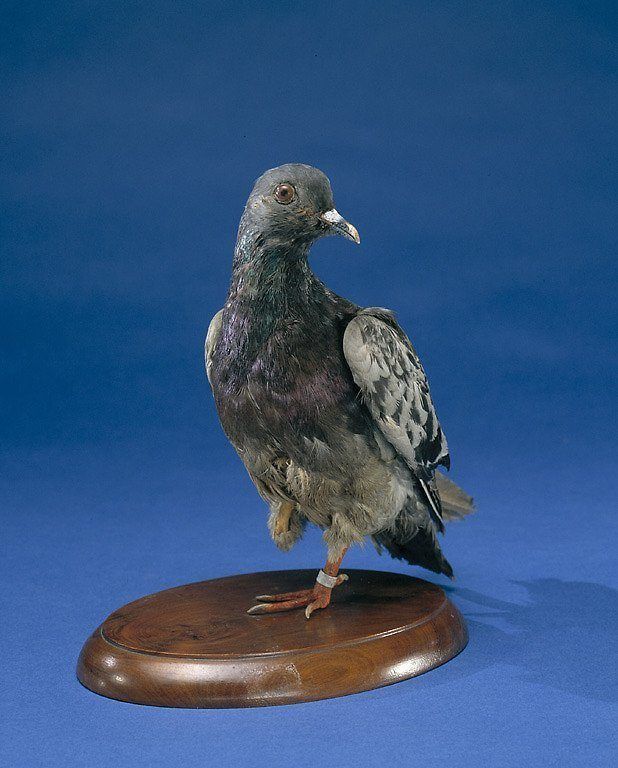
The heroic actions of one pigeon in particular, Cher Ami, (French, meaning “Dear Friend) saved nearly  200 U.S troops , despite being badly injured. The bird was a gift from the British to the U.S. Signal Corps, and he served with the 77th Infantry Division in World War I.

It was late September of 1918 in northern France. A group of 500 American soldiers led by Lt. Colonel Charles Whittlesey were trapped in a small depression of a hill, surrounded by Germans. After the first day, only 200 of his “lost battalion” remained.

Not only was the 77th, stranded behind enemy lines, they came under friendly fire from unknowing U.S. troops. Whittlesey sent out two pigeons, but German troops quickly shot them down.

Whittlesey attached one last plea to the leg of pigeon Cher Ami.  As the bird flew away, German troops immediately shot at Cher Ami wounding him in the breast and in the leg. But the bird pressed on. It took him 25 minutes to fly through a rain of bullets the 25 miles back to Allied lines. Despite his wounds, and being blinded, Cher Ami successfully delivered Whittlesey’s message. It read:

“For heaven’s sake, stop it.”

Cher Ami became an American hero, inspiring the writer Harry Webb Farrington to write a poem commemorating the incident that cost Cher Ami his leg. The poem ends,

“It’s hard a-standing on one leg!”  

For his service, Cher Ami earned the Croix de Guerre. Today, you can visit a taxidermied Cher Ami in the Smithsonian National Museum of American History.

So, the next time you see pigeons in the park, perched on a wire, or see their “calling cards” left on your car, be a little more forgiving and remember their noble history and brave service. Give their kind a little more respect for having saved hundreds of American lives.


Thanks for reading! We hope you enjoyed our post. Please share with all your fellow patriots. Brought to you by: Ultimate Flags

Posted on

The First American Battle in Korea – in 1871.

The Korean War took place between 1950 and 1953. But it may surprise you to know almost 80 years before that American Sailors and Marines fought in Korea.  It has been virtually forgotten, but it was the very first U.S. military action within the country. But no history should be forgotten.

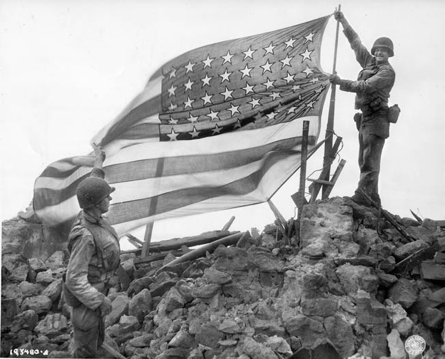
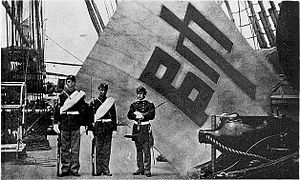
The ruling Joseon dynasty, not fond of communicating with the outside world, was in control of Korea at the time, in 1871. In 1866, an American merchant ship was destroyed as a result of a series of misunderstandings (and a healthy dose of stupidity on the part of the American merchants).That same year some Christian missionaries met a very unpleasant end, and the French Navy came to punish the Koreans. However, the French ships were repelled by Korean cannons.Five years later the American Navy arrived to Korea to establish trade and see what became the merchant ship. Americans made contact with local citizens, telling them what they planned. Several U.S. ships then sailed into the Han River, but came under fire from a Korean fortress. American vessels returned fire, silencing the fort’s guns.  The American fleet withdrew, but demanded an apology (which was not forthcoming). Ten days later, five American vessels returned and got into it with another fort. While artillery flew back and forth, American Sailors and Marines landed and climbed the walls. Two Marines captured the Korean commander’s flag. Another Marine, facing heavy fire, raised the Stars and Stripes on the fort. You can see Marines above with the captured flag. In total, five forts were destroyed. It took five more years before Korea and America established diplomatic relations.

As a result of this military action, fifteen US servicemen received medal of honor.  This was the first instance of US awards for military action during foreign conflicts.


Thanks for reading! We hope you enjoyed our post. Please share with all your fellow patriots. Brought to you by: Ultimate Flags

Posted on

A Rebel General in a Yankee Army

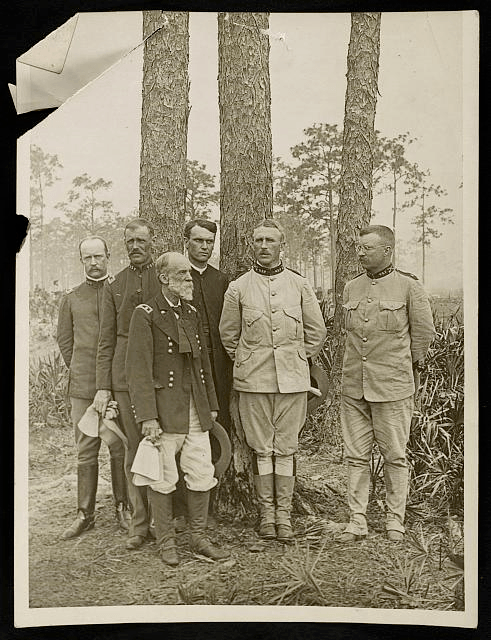
“Fightin’ Joe” Wheeler has the distinction of serving as both a Confederate General in the Civil War, and later as a U.S. Army General. That’s him in the photo, in front of the others.

Joseph Wheeler graduated from West Point in 1859. After completing Cavalry School, he was posted to Fort Craig in New Mexico Territory. It was out West that he got his nickname.

2nd Lieutenant Wheeler was escorting a wagon that had a pregnant woman on board. Suddenly, marauding Indians attacked. The wagon driver and Wheeler were the only defense. Wheeler charged the attackers. With fire from both men, they managed to drive off them off. When the soldiers heard the story later, Joe became “Fightin’ Joe.”

Things changed the next year when Wheeler’s home state of Georgia seceded from the Union: he resigned his commission and joined the Confederate Army.

Due to his skills and success as a cavalry officer, Fightin’ Joe rose quickly up the ranks, becoming a major general by 1863. He had 16 horses shot out from under him, and was wounded three times. Robert E. Lee considered him one of the two finest cavalry officers of the war. (Lee was himself a West Point graduate, and had been commandant of West Point Military Academy.)

After the war, Wheeler settled down in Alabama and raised a family. In 1880, he was elected to the U.S. Congress, where he served many terms.

When the Spanish-American War broke out in 1898, Wheeler left Congress to volunteer in the Army. He was 61.

Assigned by the President to command the cavalry in Cuba, Teddy Roosevelt’s Rough Riders were under his command. You can see future President Roosevelt to the far right in the photo above.

“Fightin’ Joe” was aggressive, and his men fought the first major battle of the war in Cuba. When the Spanish began to retreat, Wheeler is reported to have hollered out, “Let’s go, boys! We’ve got the damn Yankees on the run again!” His adjutant had to remind him that he was one of the Yankees.

Wheeler came down with malaria, but was able to get up from his sick-bed in time to take command during the Battle of San Juan Hill.

After success in Cuba, Wheeler was sent to the Philippines, where he continued to fight in the Spanish-American War for over a year.

Fighting Joe Wheeler has been honored in various ways, including having a Liberty Ship and an Army base named for him. His statue stands in the Statuary Hall in the United States Capital building, and he is buried in Arlington National Cemetery.


Thanks for reading! We hope you enjoyed our post. Please share with all your fellow patriots. Brought to you by: Ultimate Flags

Posted on

“When that pack of demons swept forward…”

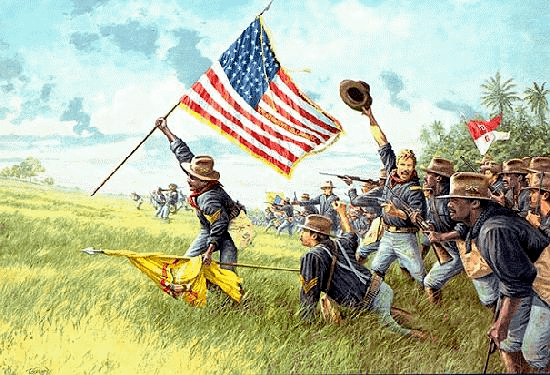
Sergeant Major Edward Baker was born in a frontier wagon in 1865, while his parents were on the Oregon Trail. At age 17, he joined one of the toughest, battle-hardened units in the U.S. Army: the 10th Cavalry.The men of the 10th were known as Buffalo Soldiers, African-Americans up through the NCO ranks. Baker was in some ferocious shootouts in the Old West, but this story begins in Cuba.What? Cuba? That’s right. America was in the middle of a tussle with Spain. One morning Sergeant Major Baker was at the edge of a jungle, staring at a fortified Spanish position. To his right was the 1st Volunteer Cavalry (the 1st commanded by Lt. Colonel Teddy Roosevelt, the future president. But the Buffalo Soldiers were the professional, seasoned veterans. Baker was going to have to lead his men out of the jungle, over open ground, across a river, up a hill, through barbed wire and enemy trenches. And then take the fortress at the top of the hill.Soon Baker was racing, artillery explosions and bullets zinging all around him. He kept his men going and got across the river.Suddenly, a scream from behind him. One of his men was in the middle of the river, badly hit. Baker went back in, pulled his man to the safety of cover. (Teddy Roosevelt would later write about the bravery of the 10th that day.)Then the 10th stormed up the hill. All hell broke loose, but nothing was going to stop the Americans that day. Corporal John Conn of the 24th Infantry later wrote:“When that pack of demons swept forward, the Spaniards stood as long as mortals could stand, then quit their trenches and retreated.” Soon the fighting was hand-to-hand. Then the Spanish lines broke, the retreating men followed by the 10th Cavalry.The Battle of San Juan Hill in 1898 is now legendary. Baker and three other men of the 10th would be awarded the Medal of Honor for actions that day. And Baker was promoted to Lieutenant, becoming one of the first black officers of the United States Army.


Thanks for reading! We hope you enjoyed our post. Please share with all your fellow patriots. Brought to you by: Ultimate Flags

Posted on

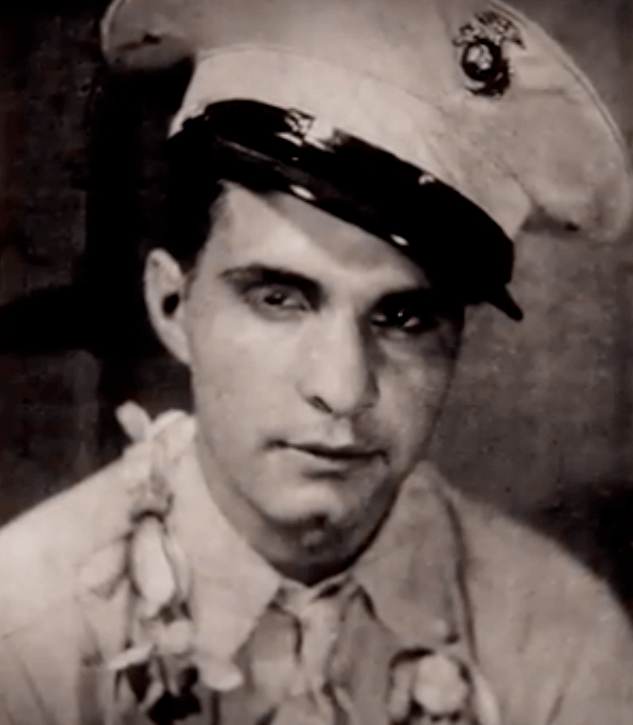
“Pied Piper of Saipan” Takes 1500 Prisoners

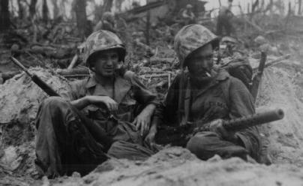
The battle for the island of Saipan in 1944 was brutal, but the ingenuity and courage of one Marine saved a lot of lives on both sides.

Guy Gabaldon grew up in poverty on the streets of East Los Angeles. Knowing how to live by his wits, he shined shoes at age 10 to help his parents and 6 siblings, and belonged to a street gang where he always took on the biggest kid. One day he got his nose broken in a fight, and went to the hospital to get it fixed. On that same night he got into another fight and got it broken again.

At age 12 Gabaldon met twins Lane and Lyle Nakano, children of Japanese immigrants, and became fascinated by Japanese culture. When the family took Guy in to live with them, he went to their Japanese school and became one of the family. Little did he know that what he learned then would lead him to perform one of the greatest feats of World War II.  

Guy Gabaldon’s dream was to join the Navy, and serve on a submarine where he hoped he would see the most dangerous action.  But his perforated eardrums and height of only 5 feet 3 inches disqualified him from the Navy.

But Gabaldon remembered a Marine Corps ad looking for Japanese speakers. Although his Japanese was limited, he told them he “knew Japanese like a native,” betting that his Japanese was better than any Marine recruiter’s. Because the need for interpreters was so great, the Marines overlooked his size and perforated eardrums and swore 17 year old Guy into the US Marine Corps. at age 17.

Soon Gabaldon found himself engaged in the bloody fighting on Saipan. There he got the idea to use his knowledge to good advantage:

“At night I’d usually go to caves — Saipan is just full of caves — and I’d get to one side of the mouth of the cave and I’d say, ‘You are completely surrounded. I’ve got a bunch of Marines here with me behind the trees. If you don’t surrender, I’ll have to kill you.’ And usually it worked.”

He promised them dignity and to get them back to Japan when the war was over.

The first time he went out, Private Gabaldon managed to get two Japanese prisoners. He was threatened with a court-martial. But he ignored that warning and on his next try, he captured over 50 enemy soldiers. After that, his missions became official:

“I’d [capture] maybe 10 or 15, 20 at a time and one day I got 800.”

There he was, surrounded by more than 800 Japanese, some of them still armed, but they were his prisoners. Guy Gabaldon is credited with single handedly capturing over 1,500 enemy soldiers and civilians.

His citation for the Silver Star states he “daringly entered enemy caves, pillboxes, buildings and jungle brush, frequently in the face of hostile fire.”

He was one tough little Marine – a kid from the streets of East LA and Marine Hero “Pied Piper of Saipan.” Well done private!

Thanks for reading! We hope you enjoyed our post. Please share with other proud patriots on social media. Brought to you by: Ultimate Flags

USMC Flag – Buy Now! US Navy Flag – Buy Now!
American Flags – Buy Now! Iwo Jima USMC Flag – Buy Now!
Posted on

“The Rag-Tag Circus”

World War II: The 83rd “Thunderbolt” Division of the U. S. Army Infantry crossed the English Channel to Normandy in June 1944. It fought through the Hedgerows, across France and into Germany, including the Battle of the Bulge.

In March 1945, the 83rd received orders to turn east and race toward Berlin.

The 83rd had to move fast, so its commanding general ordered his soldiers to “utilize to the fullest extent” commandeered German vehicles.

The Division was nicknamed “The Rag-Tag Circus” by wartime correspondents because of its resourceful commander, Major General Robert C. Macon, who ordered to add the division’s transport anything that moved; “no questions asked.”

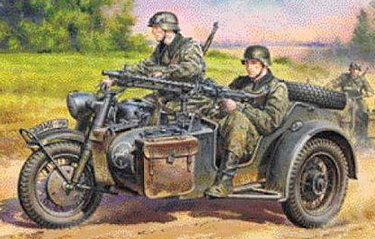
They commandeered anything on wheels––from bicycles to motorcycles to horses from the surrounding German countryside––to make a mad dash across northern Germany.
Lineman Frank Fauver was there:

“…the Germans were already on the run, so we commandeered anything that had an engine and that would run…. They called us the Rag-Tag Circus because when you looked at our convoy you couldn’t tell if it was German or American.”

On motorcycles, cars, buses and Tiger tanks, the Thunderbolts raced. They had a fire engine with a banner reading, “Next Stop: Berlin.”  Those fellows even captured an Me-109 fighter. And found someone to fly it!

At first glance, it really was hard to tell if it was an American or German division. Fauver tells a great story:

“One day when we were moving, we saw a German command car off to our rear. They were really making hay and when they came past us, I hollered ‘Germans!’ Then somebody fired just over their heads instead of shooting at them. Well, that got their attention. They thought that we were Germans but they took a second look at us and realized that the convoy that was moving was not German. So we commandeered their car, disarmed them, put them in the convoy, and took them with us, because we didn’t have time to take prisoners.”

One of Germans was a general.

In fourteen days the 83rd covered 280 miles, freed 75,000 Allied POWs and liberated several concentration camps. The papers called them “crack troops of the 83d,” and “ace shock troops,” but to those watching them it was “The Rag-Tag Circus.”

Frank Fauver, April 1944

Thanks for reading! We hope you enjoyed our post. Please share with all your fellow patriots. Brought to you by: Ultimate Flags
See All US Army Flags

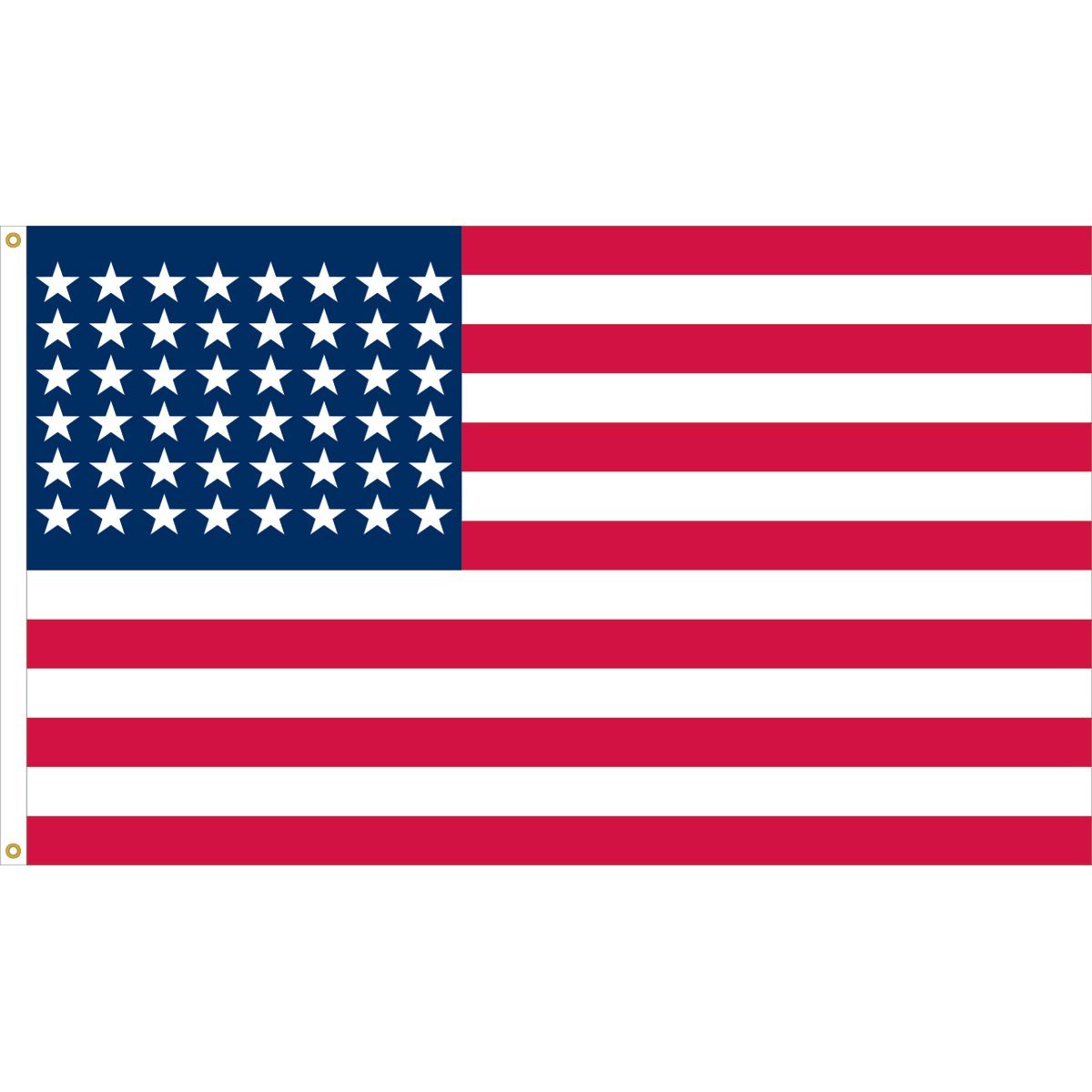
Buy USA 48 Star Flag – WW2

See All Liberty & 2nd Amendment Flags

See All Patriotic American Flags

Posted on

Brave Texas Cook Is Pearl Harbor Hero

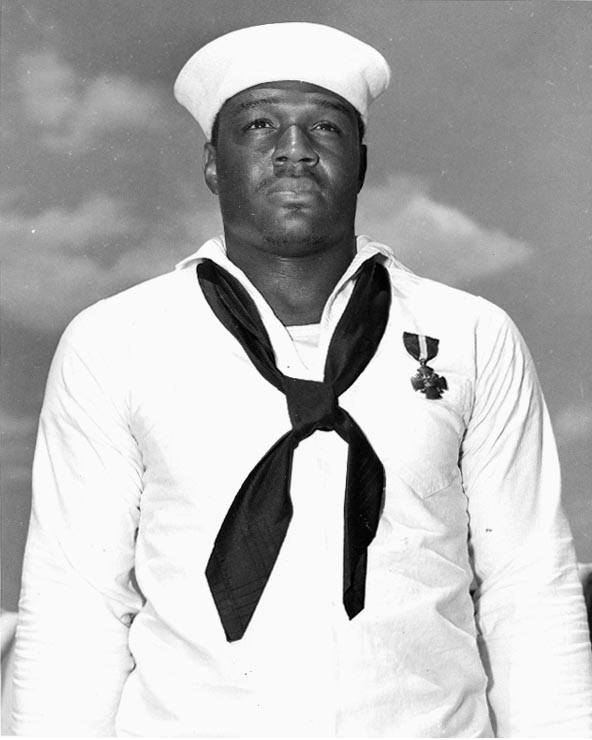
Doris Miller, known as “Dorie” to shipmates and friends, was born in Waco, Texas  in October 1919.

He helped his parents and three brothers around the house by cooking meals and doing laundry, as well as working on the family farm. Miller was a good student and a fullback on the football team at Waco’s A.J. Moore High School.  He was 6 feet 3 inches tall and weighed over 200 pounds.

In September 1939, shortly before his 20th birthday, Miller enlisted in the U.S Navy as Mess Attendant, to travel, and earn money for his family. Promoted to cook, he transferred to USS West Virginia  where he became the ship’s heavyweight boxing champion. He was serving on that battleship when the Japanese attacked Pearl Harbor on December 7, 1941.

When Miller heard the “Battle Stations” alarm on that early Sunday morning, he headed for the antiaircraft battery magazine amid-ship. But torpedo damage had wrecked it, so he went on deck. Because of his strong build, he was assigned to carry wounded fellow sailors to safety. Then an officer sent him to the bridge to aid the mortally wounded Captain of the ship.

He took the initiative to man a 50 caliber Browning anti-aircraft machine gun, a weapon he had never been trained to operate:

Miller described firing the machine gun during the battle:

“It wasn’t hard. I just pulled the trigger and she worked fine. I had watched the others with these guns. I guess I fired her for about fifteen minutes. I think I got one of those Jap planes. They were diving pretty close to us.”

He fired until he ran out of ammunition.

The Japanese planes dropped two armor-piercing bombs through the deck of the battleship and five torpedoes into her side. Miller helped move injured sailors through oil and water to the quarterdeck, “unquestionably saving the lives of a number of people who might otherwise have been lost.”

With heavy damage and flooded decks, the crew abandoned ship. The West Virginia slowly settled to the harbor bottom.

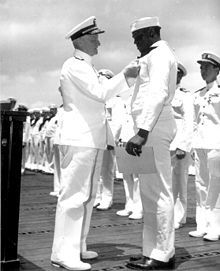
Admiral Chester W. Nimitz, Commander in Chief of the Pacific Fleet, personally presented the Navy Cross to Miller on May 27, 1942 on board aircraft carrier USS Enterprise.  He was the first African American to be awarded the Navy Cross, at the time the third-highest Navy award for extraordinary courage in battle. The citation reads:

For distinguished devotion to duty, extraordinary courage and disregard for his own personal safety during the attack on the Fleet in Pearl Harbor, Territory of Hawaii, by Japanese forces on December 7, 1941.”

“While at the side of his Captain on the bridge, Miller, despite enemy strafing and bombing and in the face of a serious fire, assisted in moving his Captain, who had been mortally wounded, to a place of greater safety, and later manned and operated a machine gun directed at enemy Japanese attacking aircraft until ordered to leave the bridge.”Nimitz also remarked:“This marks the first time in this conflict that such high tribute has been made in the Pacific Fleet to a member of his race and I’m sure that the future will see others similarly honored for brave acts.”

Nimitz awarding Miller Navy Cross aboard USS Enterprise

In addition to the Navy Cross, Miller, recognized as one of the “first US heroes of World War II,” became entitled to the Purple Heart Medal; the American Defense Service Medal, Fleet Clasp; the Asiatic-Pacific Campaign Medal; and the World War II Victory Medal.

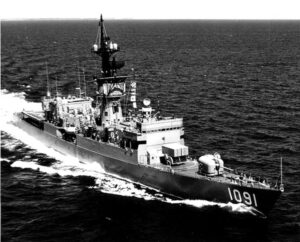
CBS radio broadcast an episode of the series “They Live Forever,” which dramatized Miller’s actions.In 1973, a Knox-class frigate, the USS Miller, was named in honor of American war hero, Doris “Dorie” Miller.

USS Miller, named in honor of “Dorie” Miller commissioned in 1973

Pretty good for a young Waco, Texas farmer and cook.


Thanks for reading! We hope you enjoyed our post. Please share with all your fellow patriots. Brought to you by: Ultimate Flags
Posted on

“Goodnight Chesty Puller, Wherever You Are!”

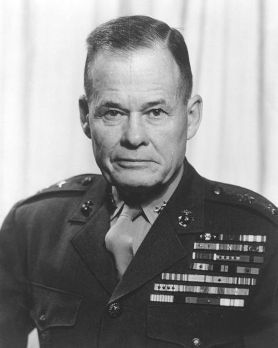
In his thirty-seven years of service to the United States Marine Corps, Lewis Puller, nicknamed “Chesty,” would rise through the ranks from Private to General,  and become the most decorated Marine in American history.

How does a guy get a nickname like “Chesty”? It is said that he had perfect posture and his torso resembled a “full-size beer keg full of lead bricks.” There is the myth that his chest had been shot away and he got a new one – a steel plate.

Others say “chesty” was an old Marine expression meaning cocky. Puller himself was not sure of how he came by the name, but he wore it well.

This Southern boy from Virginia fought in Haiti, Nicaragua, WW II and Korea. He wore five Navy Crosses, a Distinguished Service Cross, Silver Cross, Two Legions of Merit, Bronze Star, Purple Heart… well, you get the idea. Thousands of words cannot do the man justice, but here are a few.

On Guadalcanal, two Marine companies were surrounded by a large enemy force. Rescue efforts failed, and the operation commander told Puller it was hopeless. Puller marched out of camp, went down to the beach, and hailed a destroyer off the coast. Boarding the ship, he directed fire on the enemy. The shelling, along with a second landing, cleared a path for the Marines to escape. By the time Puller left Guadalcanal, he had been shot twice and taken shrapnel from a mortar round.

Puller’s men admired him and his enemies feared him. He led from the front, fighting with his men in the trenches. He never flinched even under even the most serious fire.  One time when a grenade landed next to him, the men around him dove for cover. But Puller glanced at it and nonchalantly said, “Oh, that.  It’s a dud.”  Well, I bet it wasn’t a dud until Puller ordered it to be.

In Korea, Puller’s 1st Marines were surrounded by Chinese infantry. There were some journalists with his force and they asked him what he was going to do about it. He is reported to have said: “All right, they’re on our left, they’re on our right, they’re in front of us, they’re behind us. They can’t get away this time.”

“Chesty” Puller inspired loyalty and courage in his Marines, treated his men well, insisted on the best equipment and discipline for his troops. He had no fear, and his win at all costs attitude won him those countless medals, citations, and ribbons.  

Puller has been recognized as the “baddest dude” to ever wear the uniform of the United States Marine Corps, and represents the pinnacle of toughness.

To this day, Marines at Parris Island end their day by saying,

“Good night Chesty Puller, wherever you are!”


Thanks for reading! We hope you enjoyed our post. Please share with all your fellow patriots. Brought to you by: Ultimate Flags
Posted on

“The silence was deafening.”

The World War II Battle of Guadalcanal was the first major offensive and a decisive victory for the Allies in the Pacific. Japanese troops were stationed in this section of the Solomon Islands, when U.S. Marines launched a surprise attack in August 1942 and took control of an air base under construction.

Reinforcements came in, a series of clashes unfolded, and both sides suffered heavy losses. But the Japanese losses were greater, forcing them to withdraw  from Guadalcanal by February.

Marine Platoon Sergeant Mitchell Paige had a part to play in this fight.  He was a United States Marine who won the Medal of Honor for his actions at the Battle of Guadalcanal.

One thing to know about Guadalcanal. At the start, neither side had seen defeat, and neither side was going to back down. Sergeant Paige and his 33 men were dug in on a hill when over 2,000 enemy approached. The fight was on.Paige and his men poured out lead to beat them back, but nobody was begging off.  Soon it was hand-to-hand in the foxholes, while the Marine machine gunners kept firing on the main enemy force. The enemy had swept his left flank and driven Fox Company out of position. To his right another George Company could not fire as it was on higher ground and might hit them. In the dark, Paige realized he had been moving from one machine gun to another and except for the nearby enemy he was alone: “I didn’t have time to really think about it. I was too busy shooting as fast as I could, trying to get a bead on the oncoming troops.” At one point a group of enemy overran his position. Paige had to swing his gun around and take them out before they could go over the crest and down the to the battalion command post.It was time. He yelled to George Company, “Fix bayonets; follow me.” He tossed two belts of ammo over his shoulders, unclamped his machine gun, and led the charge at a dead run. The rest of the Marines were “whooping and hollering like a bunch of wild Indians.”And when they reached the bottom of the hill, where the jungle began, there was nothing left to shoot. The battle was over.

Platoon Sergeant Paige said that after ten hours, “The silence was deafening.”


Thanks for reading! We hope you enjoyed our post. Please share with all your fellow patriots. Brought to you by: Ultimate Flags
Posted on

Oh No! It’s “Jumpin’ Joe”

War sometimes creates weird and wacky circumstances. The following account is about a soldier who became a hero of two nations.  It’s the kind of stuff that should be made into a blockbuster movie hit.

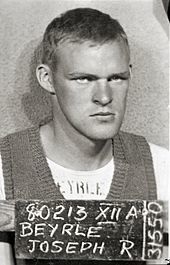
The photo above is a mugshot of paratrooper Sergeant “Jumpin’ Joe” Beryle, but it’s not what you think. It was taken at Sta lag 3, a German World War II prisoner-of-war camp south of Berlin. After taking one look at this face, and the photographer should have turned around and run away.  Here’s how the story goes.  

Instead of taking the scholarship to the University of Notre Dame in 1942 Joseph Beyrle decided to enlist in the Army as a paratrooper with the 506th Parachute Infantry Regiment of the 101st Airborne’s “Screaming Eagles” division.He quickly earned him the nickname, “Jumpin’ Joe” because he often took the place of fellow paratroopers and did their jumps for them.Before D-Day, Beryle volunteered to make two jumps on missions into Occupied France. On  June 6th, 1944, he was part of the 101st Airborne dropping from the skies behind enemy lines. He got separated from his unit, but still managed to blow up a power station before getting captured.Joe got sassy with an interrogator, as he writes in his autobiography:“Sometime during the questioning I called a German officer a “SOB” and woke up several days later in a hospital with a big headache and a bashed head…”.In November, he and three others escaped and hopped a train to Berlin. It took a week for the Gestapo to find them:“In the next 7 to 10 days we found out everything we had heard about the Gestapo was true…”When he recovered, Jumping Joe escaped again. He encountered a Soviet tank unit, and joined up with these guys to liberate his POW camp.Beryle recovered his mugshot from the Commandant’s office, but he doesn’t mention what happened to that photographer. Good time to quit? Not yet.  Beryle rode on a Russian tank as a machine gunner in some seriously hot battles until his tank was blown up by a dive bomber. He went to a field hospital, then on to Moscow where he contacted the US Embassy. But Joseph Beryle was listed as “Killed in Action” a year earlier. But things finally got sorted out, as Beryle’s autobiography states:“My funeral Mass was held at St. Joseph’s Church in Muskegon by Father Stratz on September 17, 1944. My wife and I were married in the same church on September 14, 1946, by Father Stratz.”


Thanks for reading! We hope you enjoyed our post. Please share with all your fellow patriots. Brought to you by: Ultimate Flags
Posted on

A Tough Texan Goes “To Hell and Back”

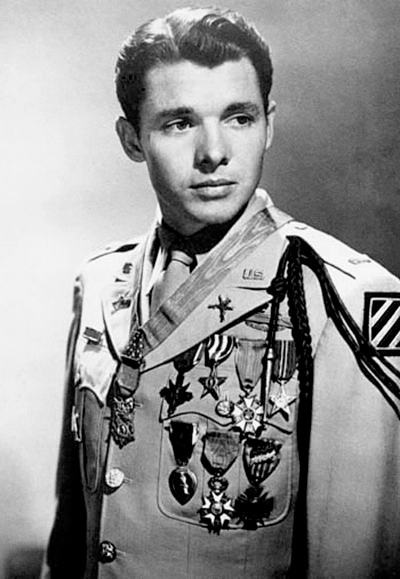
The Most Decorated American in WWII was a tough little baby-faced Texan soldier named Audie Murphy.Audie Murphy was five feet five inches, 110 pounds when he volunteered to join the US Army during World War II. He saw plenty of action in Italy, but let’s go over two stories from Europe. During the invasion of southern France, enemy soldiers pretended to surrender, then opened fire on his unit. Mad as a hornet, Sergeant Murphy took down the cowards, and proceeded to take out three machine gun nests and a couple of snipers.In January of 1945, Murphy was a Lieutenant in command of a unit of 18 men and two M-10 tank destroyers when 250 elite troops and six tanks came at them. The American shells bounced off the thick German armor, and were quickly disabled. Murphy ordered his men back, but stayed to direct an artillery strike.At one point the Germans were within 50 yards of him when headquarters asked about the enemy’s position. Murphy replied,

“If you just hold the phone a minute, I’ll let you talk to one of the bastards.” Murphy then leaped onto one of the M-10s to man the .50 caliber:

“I concentrated on the foot soldiers, believing that the tanks would not advance very far without them.” Suddenly, two 88mm shells slammed into the M-10, throwing Murphy against the turret. Surrounded by smoke and flame, he got back to the .50 caliber and continued to fire. Murphy later remarked:

“I remember getting the hell shook out of me, but that was nothing new. I also remember for the first time in three days my feet were warm.” Murphy held out until airstrikes pushed the enemy back. By the end of the war he had earned the Congressional Medal of Honor, Distinguished Service Cross, Legion of Merit, two Silver Stars, two Bronze Stars, three Purple Hearts, and a host of others. He played himself in a movie after the war, titled “To Hell and Back.”


Thanks for reading! We hope you enjoyed our post. Please share with all your fellow patriots. Brought to you by: Ultimate Flags

Posted on

“…All Hell Broke Loose.”

“As soon as the sun came up, all hell broke loose…. it seemed impossible for anyone to survive.”  

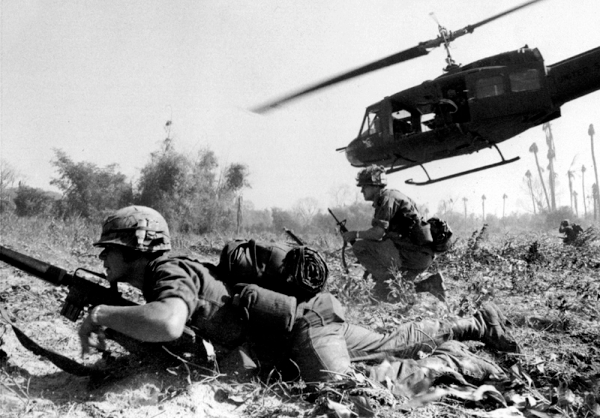
This is how Specialist LaTeague described the beginning of the Battle of Ia Drang Valley in Vietnam, where American soldiers of the the 1st Cavalry found themselves outnumbered five to one.Sergeant Major Plumley calmly said, “Gentlemen, prepare to defend yourselves,” as he yanked out his .45 pistol and jacked a round into the chamber. Plumley was a grizzled veteran of WW II and Korea, including glider assaults in Europe with the 82nd Airborne, and plenty of action with the 101st Airborne, including Porkchop Hill.

By the time he retired, Plumley had over 3 dozen medals for gallantry in five different nations, including multiple Silver stars and Purple Hearts.Courage was everywhere at Ia Drang. When 2nd Lieutenant Marm’s platoon came under fire from an entrenched machine gun, Marm assaulted the gun himself. He took it out, despite multiple wounds. Twelve enemy soldiers were found dead in the nest the next day.

Marm earned the Medal of Honor.Charlie Company was taking fire from advances on three sides of their position. Specialist Parish used all of his ammo fighting back. More than 100 enemy troops were found dead around his foxhole after the battle.  

Parish earned a Silver Star.These stories were repeated again and again as the 7th Cavalry held out until reinforcements could arrive.


Thanks for reading! We hope you enjoyed our post. Please share with all your fellow patriots. Brought to you by: Ultimate Flags