
 BUY Rebel Flags For Sale
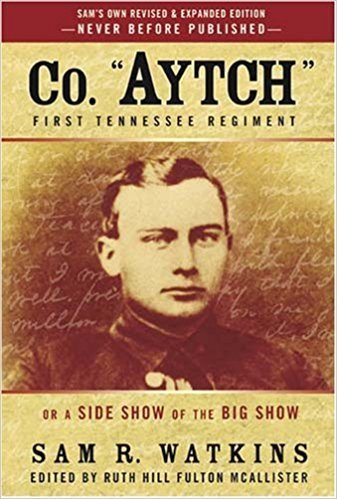
Most Civil War soldiers who slipped away from camp did it quietly and hoped nobody noticed. Sam Watkins of the 1st Tennessee Infantry did it in a leaky canoe on a flooded river, walked the rest of the way home to see his sweetheart, came back on his own, and then paid for it out of his own pocket. The story comes from his famous memoir “Co. Aytch,” and it shows the humor, homesickness and hard discipline of life in the Army of Tennessee during the long camp at Shelbyville in 1863.

The Army of Tennessee Settles in Along the Duck River
The story begins after the bloody Battle of Stones River (also called Murfreesboro), fought from December 31, 1862, to January 2, 1863. Sam was in the thick of it. Charging with Maney’s brigade of General Benjamin F. Cheatham’s division, he was hit in the arm by a shell fragment and a minie ball. After the battle, General Braxton Bragg pulled his army back about thirty miles to the south and set up a defensive line behind the Duck River.
Bragg made his headquarters at Tullahoma. Lieutenant General Leonidas Polk’s corps, which included Cheatham’s division and the 1st Tennessee, dug in at Shelbyville. Meanwhile the Union Army of the Cumberland under General William S. Rosecrans stayed at Murfreesboro for nearly six months, building supply depots and waiting for the muddy winter roads to dry. For the Southern soldiers, that meant months of camp life with no battles to fight.
Camp Life at Shelbyville
Watkins remembered Shelbyville as a place where boredom was the enemy. With no money left in the regiment, the men gambled at poker and chuck-a-luck using grains of corn as chips. Sam and his friends waded into the Duck River hunting freshwater mussels, then tried frying, stewing, boiling and baking them, and found that the longer they cooked, the tougher they got.
Not all of it was funny. A tornado tore through Shelbyville while the regiment was there, and Sam’s close friend Berry Morgan was killed when the storm wrecked the old depot shed where the men had taken cover. The army also carried out executions for desertion, and the whole division was marched out to watch. Those scenes would be on Sam’s mind when he decided to take an unofficial trip home.
“Down Duck River in a Canoe”
From Shelbyville, the Duck River flows west toward Columbia, the seat of Maury County, which was Sam’s home country. One day the river was running high from the rains. In Sam’s own words, it “had on its Sunday clothes.”
Sam and his messmate Andy Wilson had the same idea at the same time. Both had a girl back home, and a swollen river flowing straight toward Columbia looked like an invitation. They found a canoe and pushed off. Unfortunately it was a leaky craft, and they had not gone far before it capsized and dumped them in the river. They swam to shore and found themselves outside the army’s lines without passes.
Going back now would mean arrest anyway, so they kept going on foot, or as Sam put it, they “put our sand paddles to work and landed in Columbia that night.”
A Visit Home and a Request for Prayers
Sam knew exactly what was waiting for him when he got back. When he called on his sweetheart that night, he asked her to pray for him, joking that a pretty woman’s prayers would carry further “up yonder” than his own. He also met his Cousin Alice at his father’s front gate and asked her to pray for him too, telling her he was sure he would be court-martialed but that he had no intention of deserting. He only wanted to see the girl he loved.
He was as good as his word. It took him a day to get to Columbia and a day to get back, and he spent just one day at home before returning to Shelbyville of his own accord. Sam later married Virginia “Jennie” Mayes in 1865, and the two are buried side by side at Zion Presbyterian Church near Columbia.
Court-Martialed: Thirty Days and Forty-Four Dollars
As soon as he reached camp, Sam was arrested and put in the guard-house. The court-martial sentenced him to thirty days of fatigue duty, the hard labor of digging, chopping and hauling, and ordered him to forfeit four months’ pay.
A Confederate private earned $11 a month, a rate that did not change until June 1864, when it was raised to $18. Four months at eleven dollars came to forty-four dollars, a painful loss for a man whose pay was already small, often months behind and shrinking in value as Confederate currency lost its worth.
General Polk’s Pardon, With One Catch
Then Sam’s luck turned. According to his memoir, General Leonidas Polk had issued an order that same day promising a pardon to all soldiers absent without leave who returned to the army. Polk, a West Point graduate who had become the Episcopal Bishop of Louisiana before the war, was known among the men as a gentle commander.
Sam talked the guard into marching him up to Polk’s headquarters, explained his situation, and the general ordered his release. But Polk said nothing about the fine. When the regiment was finally paid off months later at Chattanooga, Sam’s name was left off. As he dryly put it:
“The Confederate States of America were richer by forty-four dollars.”
What Came Next for Sam and the 1st Tennessee
In late June 1863, Rosecrans finally moved. In the Tullahoma Campaign, he maneuvered Bragg out of his Duck River line with very little fighting, and the Army of Tennessee fell back to Chattanooga. From there Sam marched on to Chickamauga, Missionary Ridge, the Atlanta Campaign, Franklin and Nashville. When the army surrendered in North Carolina in April 1865, he was one of only seven men left in his company.
Years later, in 1881 and 1882, he told his stories in the Columbia Herald, and they were published as “Co. Aytch” in 1882. The canoe trip is one of the shortest chapters in the book, but it captures what made Sam Watkins beloved: honesty about his own mischief, a sense of humor about hardship, and a deep love for home.

Frequently Asked Questions
Who went down the Duck River with Sam Watkins?
His comrade Andy Wilson went with him. Both men wanted to visit sweethearts in Columbia, and both ended up walking after their leaky canoe capsized.
Where was the 1st Tennessee camped in early 1863?
After the Battle of Stones River, the 1st Tennessee camped at Shelbyville on the Duck River with Polk’s corps. Bragg’s army headquarters was nearby at Tullahoma.
How much was a Confederate private paid?
A Confederate private was paid $11 a month until June 1864, when the rate rose to $18. Pay often ran months behind.
What was the punishment for being absent without leave in the Confederate army?
It varied with the circumstances. Sam Watkins received thirty days of fatigue duty and lost four months’ pay, while men judged to be deserters could face whipping, branding or execution.
Did General Polk pardon Sam Watkins?
Yes. Polk had issued an order pardoning soldiers absent without leave who came back, and he ordered Sam released. The forfeited $44 was never returned.
Who did Sam Watkins marry?
Sam Watkins married Virginia “Jennie” Mayes in 1865. They are buried at Zion Presbyterian Church cemetery in Maury County, Tennessee.
Remember the Men of Maury County
Want more from Company H? Read how Sam outfoxed a farmer with a shotgun in Sam Watkins and the Corn Patch Raid at Tupelo. Honor the Volunteer State with our State of Tennessee Flag, fly the banner of Polk’s corps with the Polk Battle Flag in embroidered nylon, or display the Confederate States of America Seal Flag that Sam’s forty-four dollars went to.
Thanks for reading. Please share our posts with your friends and family so they too can learn more about Southern Heritage and History.
Brought to you by: Ultimate Flags