
 BUY Rebel Flags For Sale
Some of the best stories of the War Between the States have nothing to do with great charges or famous generals. They come from the long cold nights on picket, when a soldier’s orders, his nerves and his empty stomach all met at once. One of the most enjoyable was told by David Emmons Johnston, a Giles County, Virginia, boy who served four years in Company D of the 7th Virginia Infantry. It involves a sentry, a strict set of orders and a very unlucky hog.
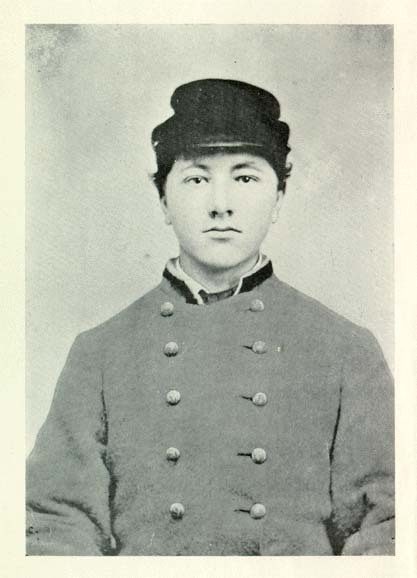
A Sixteen-Year-Old from Giles County
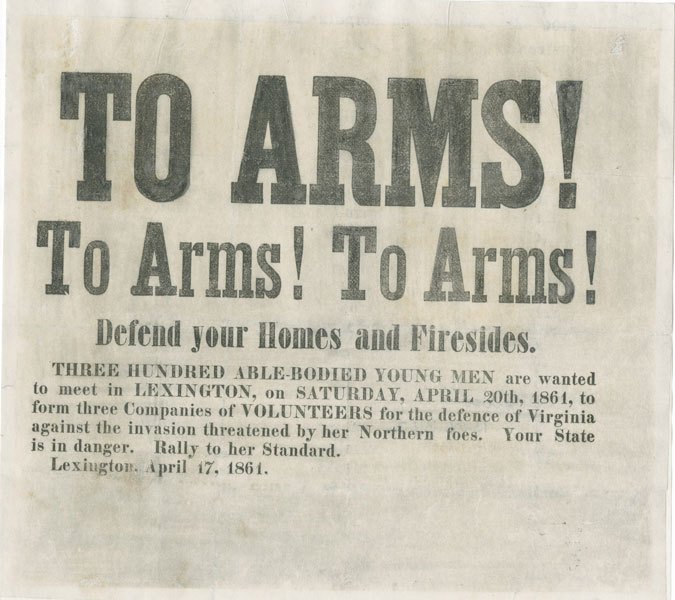
Johnston was born on April 10, 1845, near Pearisburg in Giles County, in the mountains of southwest Virginia. When Virginia left the Union in April 1861, he had just turned sixteen. He signed the rolls of a new volunteer company organized at Pearisburg on April 25, 1861, under Captain James H. French. The company proudly called itself the “Mountain Boomers.” Before the boys marched off, the ladies of the town presented a flag, and the pupils of the Pearisburg Academy gave the company a Bible.
Johnston later described Giles County’s men as hardy mountaineers used to the rifle and the hunt, and he loved them all his life. He was not alone in his youth. Thousands of Southern boys his age joined that spring, sure the war would be over in a few months.
From the 24th to the 7th Virginia
The company traveled to Lynchburg and then to Manassas Junction, where it was first placed in the 24th Virginia under Colonel Jubal A. Early. After a quarrel between officers, the Giles men were transferred to the 7th Virginia Infantry, commanded by Colonel James L. Kemper of Madison County. They became Company D, joining companies from Madison, Rappahannock, Culpeper, Orange, Greene, Albemarle and even Washington, D.C.
The 7th Virginia saw its first fighting at Blackburn’s Ford on Bull Run on July 18, 1861, helping turn back a Federal probe. Three days later, at the First Battle of Manassas on July 21, the regiment marched some eight miles toward the sound of the guns and reached the Confederate left in time to help drive the Federals from the field near the Chinn house. Company D lost Joseph E. Bane, its color bearer, killed, and several men wounded.
A New Battle Flag
In the smoke at Manassas, Southern officers had trouble telling their own flags from the enemy’s. That confusion led to one of the most famous banners in American history. Johnston recalled that a uniform battle flag was designed by Colonel William Porcher Miles of South Carolina and presented by General P. G. T. Beauregard to the army that winter. It had a red field crossed by blue bars with thirteen white stars, and Johnston wrote that it “was ever after our battle flag.”
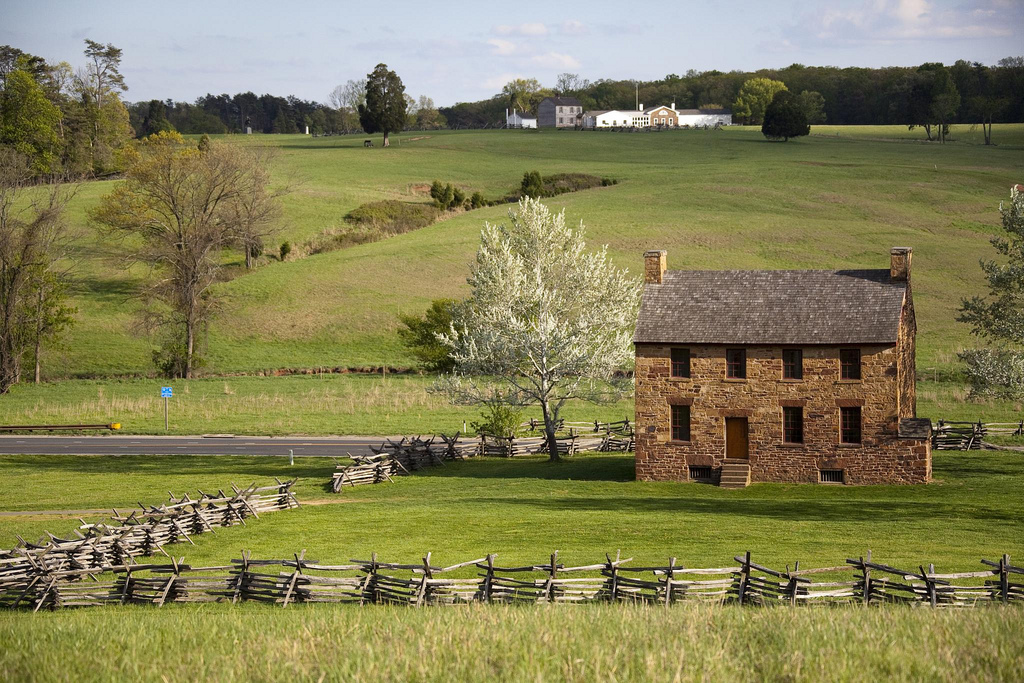
Winter Quarters at Centreville
The Confederate army spent the winter of 1861 to 1862 around Centreville, Virginia, a few miles beyond the Manassas battlefield. The men built log huts with wooden chimneys and hauled rations six miles over roads deep in mud. Picket duty on the outposts facing the Federal army around Washington was constant, cold and often lonely. Orders were strict. A sentry was to challenge anything approaching his post, call “halt” three times, and fire only if the command was ignored.
John R. Crawford: A Man Who Knew No Fear
One of Company D’s privates was John R. Crawford, who had enlisted in April 1861. Johnston wrote that Crawford had scarcely an equal for courage and coolness. Earlier that fall, while guarding baggage at a railroad station near Fairfax, Crawford had been approached by two of the famous Louisiana “Tigers” who meant to help themselves to the stores. He warned them off. When they kept coming, he knocked the first one down with his musket, and the second man retreated in a hurry.
The Hog That Would Not Halt
Then came the night on picket that made Crawford a camp legend. In Johnston’s own words:
“Again we were on picket, Crawford on outpost, with instructions to keep a sharp lookout, as the enemy was near, but not to shoot without calling ‘halt’ the usual three times, and if no halt made, to shoot. Shortly after Crawford took post, his cries of ‘Halt! Halt! Halt!’ were heard, and bang! went his gun.”
The corporal of the guard ran forward expecting to find a Yankee scout. Instead, he found Crawford calmly standing at his post as though nothing at all had happened. A stray fat hog had wandered up to the outpost and, as Johnston dryly put it, “had not halted at Crawford’s command.” Crawford offered only one explanation: “I obeyed orders.”
Nobody could argue with that. The hog was roasted, Crawford received many compliments, and the whole picket enjoyed a feast. In an army that would soon learn what real hunger was, it was a night the men remembered fondly.
Johnston’s Later War
The good times did not last. The 7th Virginia went on to fight at Williamsburg, Seven Pines, the Seven Days, Second Manassas, Antietam and Fredericksburg as part of Kemper’s brigade. In November 1862, Johnston became sergeant major of the regiment, a post he held until the end. At Gettysburg on July 3, 1863, Kemper’s brigade went forward in Pickett’s Charge. Johnston was wounded and captured, held as a prisoner, and later paroled. He returned to the regiment that winter, fought at Drewry’s Bluff and Cold Harbor and through the siege of Petersburg, and was captured again at Sailor’s Creek in April 1865. He was released from the prison at Point Lookout, Maryland, after the war ended.
From Soldier to Judge and Congressman
After the war Johnston studied law and was admitted to the bar in 1867. He moved to Mercer County, West Virginia, served as prosecuting attorney and state senator, sat as a circuit judge from 1880 to 1888, and represented West Virginia’s 3rd District in the U.S. House from 1899 to 1901. He first published his memories of Company D in 1887 as Four Years a Soldier, then rewrote and expanded them as The Story of a Confederate Boy in the Civil War, published in Portland, Oregon, in 1914. He explained that his aim was to show “the Confederate soldier in the ranks” and his “individual deeds of heroism.” He died in Portland on July 7, 1917.
Frequently Asked Questions
Who was David E. Johnston?
David Emmons Johnston (1845 to 1917) served four years in Company D, 7th Virginia Infantry, and later became a judge and a U.S. congressman from West Virginia.
What book did David E. Johnston write?
He wrote Four Years a Soldier in 1887 and expanded it into The Story of a Confederate Boy in the Civil War in 1914.
What were the Mountain Boomers?
The Mountain Boomers were the volunteer company from Giles County, Virginia, organized in April 1861, that became Company D of the 7th Virginia Infantry.
What happened with the hog on picket duty?
Private John R. Crawford called halt three times, as ordered, then shot a stray hog that kept coming. He said he obeyed orders, and the picket roasted it.
Where did the 7th Virginia spend the winter of 1861?
The regiment spent the winter of 1861 to 1862 in log huts around Centreville, Virginia, near the Manassas battlefield.
Was the 7th Virginia in Pickett’s Charge?
Yes. The 7th Virginia was part of Kemper’s brigade of Pickett’s division and charged at Gettysburg on July 3, 1863. Johnston was wounded and captured there.
Remember the Men of the Old Dominion
Read about another winter on the outposts in Christmas Picket on the Potomac, 1861, and meet the Louisiana Tigers in Wheat’s Tigers at 1st Manassas. Honor Virginia’s soldiers with a State of Virginia Flag, remember Kemper’s brigade with the 17th Virginia Infantry Cotton Flag, or see the battle flag born after Manassas in our Rebel Flags collection.
Thanks for reading. Please share our posts with your friends and family so they too can learn more about Southern Heritage and History.
Brought to you by: Ultimate Flags