

 BUY Rebel Flags For Sale
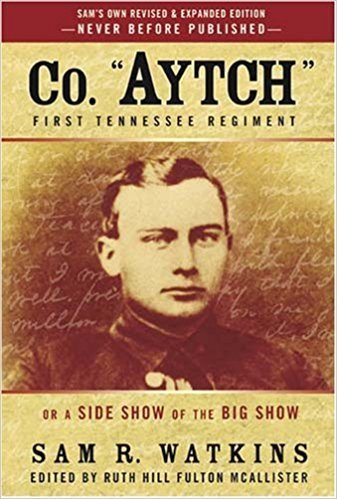
Few Confederate soldiers could tell a story like Sam Watkins of the 1st Tennessee Infantry. His memoir, “Co. Aytch,” is full of hard fighting and real grief, but it is also full of mischief, and one of his best tales took place in a farmer’s corn patch outside Tupelo, Mississippi, in the summer of 1862. It involves a hungry private, his partner in crime, an angry old man with a shotgun and a general who was in no mood for excuses. Here is the story, and the history behind it.
Who Was Sam Watkins?
Samuel Rush Watkins was born on June 26, 1839, in Mount Pleasant, Tennessee, in Maury County. When war came in 1861 he joined the Maury Grays, which became Company H of the 1st Tennessee Infantry. That is where the title of his book comes from: “Co. Aytch” is simply Company H, spelled the way a soldier would say it.
Watkins served from Shiloh all the way to Nashville, fighting at Perryville, Murfreesboro, Chickamauga, Missionary Ridge and through the Atlanta Campaign, where he was wounded. When the Army of Tennessee surrendered in North Carolina in April 1865, he was one of only seven men left in his company. Years later he wrote his memories as a newspaper serial for the Columbia Herald in 1881 and 1882, and they were published as a book in 1882. Watkins died on July 20, 1901, and is buried in Zion Cemetery near Mount Pleasant. Generations later, his words became one of the best-loved voices in Ken Burns’ 1990 documentary The Civil War.
A Hungry Army at Tupelo
The summer of 1862 was a hard time for the Confederate army in the West. In April it had fought the bloody Battle of Shiloh, where General Albert Sidney Johnston was killed. In late May, General P. G. T. Beauregard evacuated Corinth, Mississippi, in the face of a huge Union army and fell back about fifty miles south to Tupelo.
The camps at Tupelo were crowded, hot and short on rations, and sickness was everywhere. Beauregard himself was ill, and in June he left the army to rest at Bladen Springs, Alabama, handing command to General Braxton Bragg. Jefferson Davis, already unhappy with Beauregard, used the absence to make Bragg’s command permanent on June 20, 1862.
Bragg’s Iron Discipline
Bragg set out at once to restore order to a worn-out, demoralized army. He drilled the men hard and punished straggling, desertion and plundering without mercy. Watkins remembered that at Tupelo the sound of firing squads became part of camp life:
“Almost every day we would hear a discharge of musketry, and knew that some poor, trembling wretch had bid farewell to mortal things here below.”
He added that he heard of many being shot, though he personally saw only two. Bragg also took the side of the local farmers, whose fields and smokehouses were being stripped by hungry soldiers. According to Watkins, the general “issued an order authorizing citizens to defend themselves against the depredations of soldiers” and to “shoot them down if caught depredating.” In plain words: a soldier caught stealing a farmer’s food could expect a load of buckshot.
The Raid on the Roasting-Ear Patch
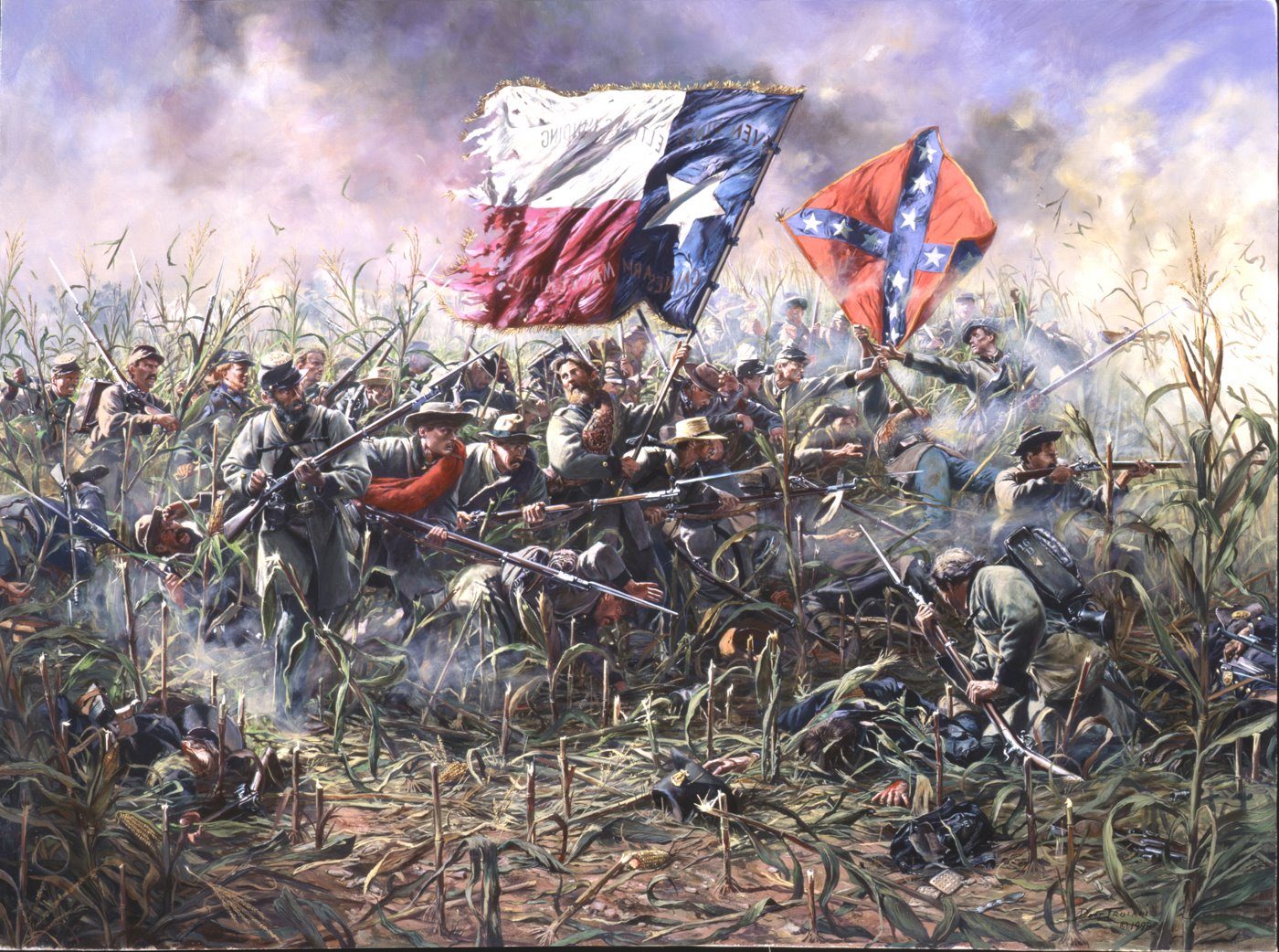
Orders are one thing and an empty stomach is another. Sam and his messmate Byron Richardson spotted a field of young corn, the tender “roasting ears” soldiers prized for cooking in the ashes of a campfire. In spite of Bragg’s order, the two men slipped into the patch and began filling their arms.
They were not alone. As Sam gathered his armful, the owner rose up out of the rows with a double-barreled shotgun “cocked and leveled” at his chest and ordered him to drop the corn. Then the old man began marching his prisoner off toward General Bragg’s headquarters. Sam pleaded and argued, but the farmer would not budge. Watkins said he “could see the devil in the old fellow’s eye.”
Sam Turns the Tables
A trip to Bragg’s headquarters could end in front of a firing squad, so Sam thought fast. He told his captor that his friend Byron Richardson was still in the field, and that if they went back, the old man could capture both of them and take them to the general together.
The farmer took the bait. “He had captured me so easy,” Watkins wrote, “he no doubt thought he could whip a dozen.” Back they went, and there was Byron with his arms full of corn. As the old man raised his gun, Sam grabbed it, and with Byron’s help the two soldiers soon had the farmer and his shotgun both. For good measure, they bent the shotgun around a blackjack oak.
Then came the final insult. Watkins recalled that they made the old man gather as much corn as he could carry and haul it nearly to camp before they let him go, “a wiser if not a better and richer man.”
What the Story Tells Us
It is a funny story, and Watkins told it with a twinkle in his eye. But it also shows how thin the line was between hunger and hard punishment in the Confederate army of the West. Soldiers who had marched and fought for months on short rations were tempted every day by the fields around them, and the farmers whose families depended on those crops had every reason to defend them. Bragg’s harsh discipline did pull the army back together. Within weeks it was moving by rail to Chattanooga for the invasion of Kentucky and the hard-fought Battle of Perryville that October.
Frequently Asked Questions
What does “Co. Aytch” mean?
“Co. Aytch” stands for Company H, Sam Watkins’ company in the 1st Tennessee Infantry. He spelled out the letter H the way it sounds.
When was Co. Aytch published?
Watkins first published his memoir as a serial in the Columbia Herald in 1881-1882, and it came out as a book in 1882.
Why was the Confederate army at Tupelo in 1862?
The army fell back to Tupelo after evacuating Corinth, Mississippi, in late May 1862. It rested and reorganized there before the Kentucky Campaign.
When did Braxton Bragg take command of the army at Tupelo?
Bragg took over when Beauregard left on sick leave in June 1862, and Jefferson Davis made the command permanent on June 20, 1862.
What are roasting ears?
Roasting ears are young, tender ears of corn picked before they harden. Civil War soldiers often roasted them in the husk in the coals of a campfire.
Was Sam Watkins wounded in the war?
Yes. Watkins was wounded during the 1864 Atlanta Campaign, and he survived the war as one of only seven men left in his original company.
Where is Sam Watkins buried?
Sam Watkins is buried in Zion Cemetery near Mount Pleasant in Maury County, Tennessee. He died on July 20, 1901.
Honor the Boys of the 1st Tennessee
For more of Sam’s adventures, read Pvt. Watkins Wonders if He’ll Ever Get His Furlough. Show your Volunteer State pride with our State of Tennessee Flag or the Polk Battle Flag of the Army of Tennessee, and remember the common soldier with our Rebel Flag in heavy cotton.
Thanks for reading. Please share our posts with your friends and family so they too can learn more about Southern Heritage and History.
Brought to you by: Ultimate Flags