

 BUY Rebel Flags For Sale
Every veteran remembers the first time the bullets came his way. For Private Sam Watkins of Company H, 1st Tennessee Infantry, that moment arrived on a muddy mountain road in western Virginia in the fall of 1861. Twenty years later he set it down in one of the most loved soldier memoirs ever written, and his description still crackles: “bang, debang, debang, bang, and a volley of buck and ball came hurling.”
This is the story of that first fight, the regiment that endured it and the campaign that carried a company of Tennessee boys across the Appalachians to serve under a general named Robert E. Lee.
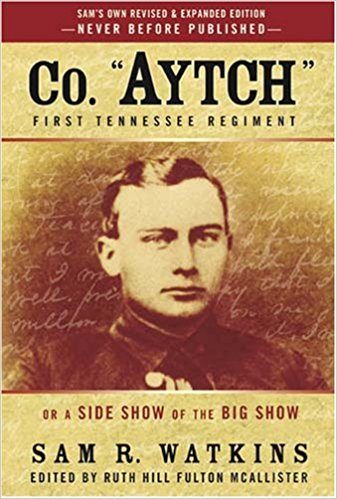
Sam Watkins and “Co. Aytch”
Samuel Rush Watkins was born in 1839 near Columbia, in Maury County, Tennessee. In May 1861 he joined the Maury Grays, which became Company H of the 1st Tennessee Infantry Regiment. He stayed with the regiment through Shiloh, Perryville, Murfreesboro, Chickamauga, Missionary Ridge, the Atlanta Campaign, Franklin and Nashville, and he was one of only a handful of the original company still standing when the Army of Tennessee laid down its arms in North Carolina in April 1865.
In 1881, with what he called a house full of young “rebels” clustering about his elbows, Watkins began writing his recollections for the Columbia Herald. They were published as a book in 1882 under the title “Co. Aytch,” Maury Grays, First Tennessee Regiment, or, A Side Show of the Big Show. “Aytch” is simply the letter H spelled out. Watkins wrote as a private, not a general, and that is exactly why readers still treasure the book: it tells what the war felt like to the man carrying the musket.
From Nashville to the Mountains of Western Virginia
The 1st Tennessee was organized at Nashville in May 1861 under Colonel George Maney, a Mexican War veteran and lawyer who would later rise to brigadier general. In July the regiment was ordered to Virginia. At Valley Mountain it joined the 7th and 14th Tennessee to form a brigade under Brigadier General Samuel R. Anderson in General William W. Loring’s division of the Army of the Northwest.
The Confederate government had sent General Robert E. Lee to the region to recover the mountain passes lost to Union forces earlier that summer. Federal troops under Brigadier General Joseph J. Reynolds, about 1,800 men, held a fortified position on the summit of Cheat Mountain and a second camp at Elkwater in the Tygart River Valley. Lee planned a bold three-pronged attack with roughly 5,000 men to surround and capture them.
Nature fought on the Union side. That summer and fall brought nearly constant rain, mud axle-deep on the roads, fog, measles and typhoid in the camps. Watkins and his comrades, many of them sons of comfortable Middle Tennessee farms, learned fast that soldiering was mostly marching, waiting, shivering and going hungry.
“Bang, Debang, Debang, Bang”: The Ambush
Lee’s attack against Cheat Mountain was set in motion on September 12, 1861, and Anderson’s Tennessee brigade was assigned to work its way around the Federal positions through the dense mountain forest. Union reports of the campaign record that the force their scouts ran into included the 1st Tennessee under Colonel Maney and the 7th Tennessee. According to Watkins, this was his regiment’s first real engagement.
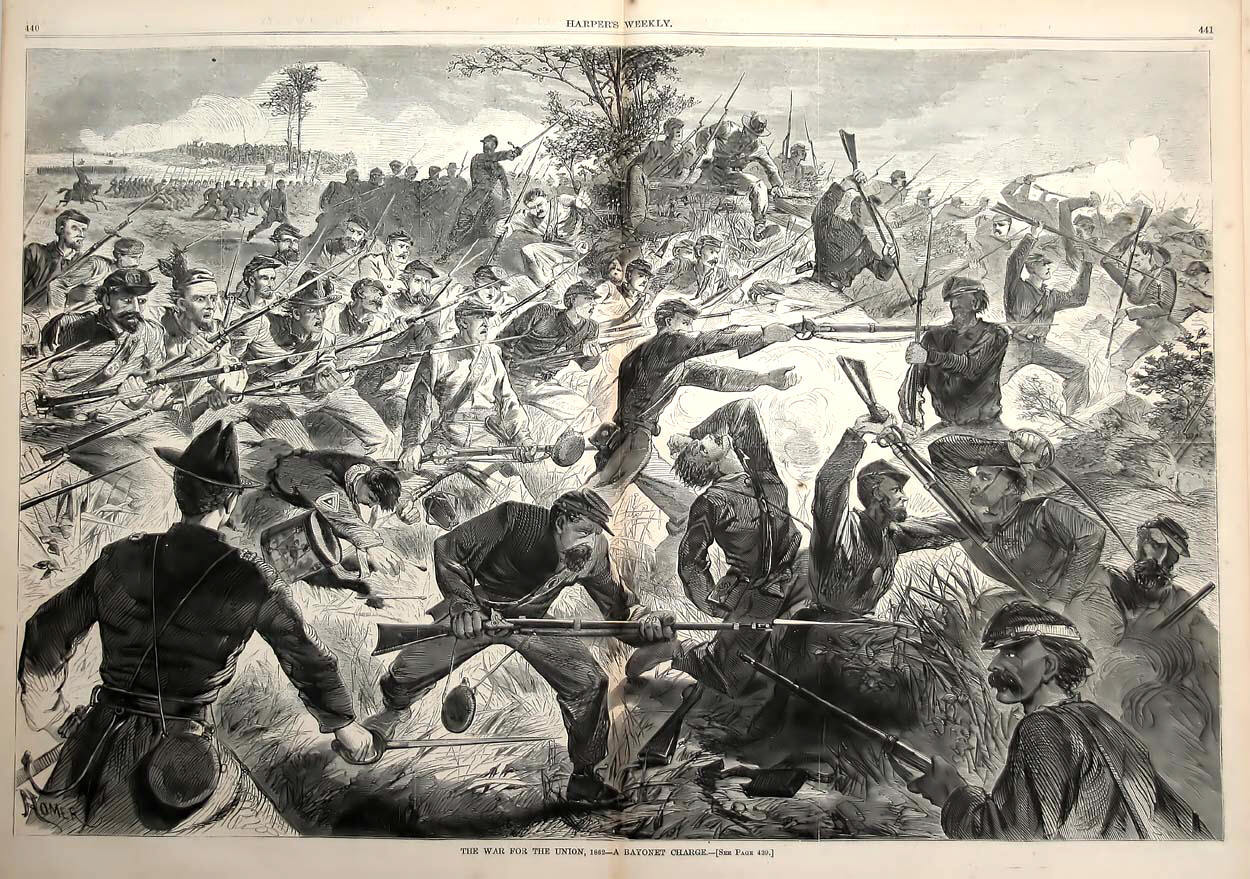
He remembered that some of the boys were picking blackberries and the main body of the regiment was marching leisurely along the road when the woods exploded with fire aimed at the two lead companies, H and K. “Buck and ball” was a common smoothbore musket load of the early war: one round lead ball topped with three smaller buckshot, deadly at close range.
“No one seemed equal to the emergency. We did not know whether to run or stand, when Captain Field gave the command to fire and charge the bushes. We charged the bushes and saw the Yankees running through them.”
The officer Watkins calls “Captain Field” was Hume R. Feild, who later rose to colonel and commanded the 1st Tennessee for much of the war. Watkins admired him more than almost any man in the army and wrote that Feild was the rare officer who did much of his own shooting.
Why the Officers Tore Off Their Gold Lace
After the skirmish Watkins noticed something odd. Corporals, sergeants, lieutenants and captains had all torn the fine lace and braid off their new uniforms. When he asked why, the answer was always the same: did he think they were going to make themselves a target for the Yankees?
Watkins found it funny. In his telling, the officers had not yet learned that bullets and cannon balls “had no eyes and could not see.” Then he added a hard truth from the ranks: he always shot at privates, because it was the privates who did the shooting and the killing, and at close quarters he tried to hit the man who was trying to hit him. It is the kind of plain, unvarnished honesty that makes Co. Aytch different from the polished memoirs of generals.
How the Cheat Mountain Campaign Ended
Lee’s plan depended on perfect timing between columns that could barely see each other in the rain and fog. When Colonel Albert Rust’s column, which was supposed to open the attack on the summit fort, did not strike, and prisoners gave exaggerated reports of Union strength, Lee called off the assault. During the maneuvering, Lee’s aide Colonel John A. Washington, a great-grandnephew of George Washington, was killed while scouting. Lee withdrew to Valley Mountain on September 17.
The campaign is remembered as a disappointing start for Lee, and some Southern newspapers mocked him for it. Within a year the same general would be leading the Army of Northern Virginia to its greatest victories. The 1st Tennessee, meanwhile, was ordered to Winchester in December 1861 and served under Stonewall Jackson in the bitter winter Romney expedition before returning west in early 1862 in time for Shiloh.
Why Sam Watkins’ Story Still Matters
Thousands of Confederate soldiers went into their first fight the way Company H did: green, brave, a little bewildered and determined not to let down the men beside them. Watkins gives that experience a voice. He would go on to describe Perryville, the Dead Angle at Kennesaw and the horror of Franklin, but his account of the first ambush reminds us that every veteran started out as a farm boy who did not know whether to run or stand, and chose to stand.
You can read more of his adventures in Sam Watkins and the Stubborn Mule of Shiloh and Sam Watkins Becomes a Corporal at the Battle of Atlanta.
Frequently Asked Questions
What was Sam Watkins’ first battle?
Watkins and the 1st Tennessee had their first real combat during Robert E. Lee’s Cheat Mountain campaign in western Virginia in September 1861, when the regiment’s lead companies were ambushed on a mountain road.
What does “buck and ball” mean in the Civil War?
Buck and ball was a smoothbore musket cartridge that combined one large round ball with three smaller buckshot pellets. It spread like a small shotgun blast and was especially deadly at close range.
What does “Co. Aytch” mean?
“Co. Aytch” means Company H, with the letter H spelled out. It is the title of Sam Watkins’ 1882 memoir about his service in Company H of the 1st Tennessee Infantry.
Who was Captain Field in Co. Aytch?
Watkins’ “Captain Field” was Hume R. Feild, an officer of the 1st Tennessee who later became colonel of the regiment. Watkins praised him as one of the bravest men he served with.
Who won the Battle of Cheat Mountain?
The Union held its positions. Lee’s three-pronged attack of September 12–15, 1861, was hampered by rain, fog and poor communication, and he withdrew to Valley Mountain on September 17.
Is Co. Aytch a true story?
Co. Aytch is a genuine memoir written by a real soldier about events he lived through. Watkins wrote it about 20 years after the war and freely added humor and color, so historians read it as a personal recollection rather than an official record.
Honor the 1st Tennessee
Honor Sam Watkins and the men of Maury County with a Tennessee Flag in Cotton, or fly the colors of the Army of Tennessee with a Polk Battle Flag. Browse our full selection of Rebel Flags and Civil War Flags.
Thanks for reading. Please share our posts with your friends and family so they too can learn more about Southern Heritage and History.
Brought to you by: Ultimate Flags