
 BUY Rebel Flags For Sale
Few phrases in American history carry as much grit as “Come and Take It.” You see it on flags, trucks and T-shirts all across Texas and the South, yet it is often repeated, and sometimes misunderstood, by people who have never heard the story behind it. The words are older than Texas itself. They reach back to ancient Greece, ring out from a Georgia fort during the American Revolution, and then fly over a small cannon on the banks of the Guadalupe River in 1835. Here is the true history of the most defiant flag in Texas.
Molon Labe: Leonidas at Thermopylae
The oldest version of the phrase comes from the Greek writer Plutarch, who gathered the famous sayings of the Spartans. According to his account, in 480 BC the Persian King Xerxes invaded Greece with an enormous army and demanded that King Leonidas of Sparta and his small band of Greeks give up their weapons at the narrow pass of Thermopylae. Leonidas answered with two words: molon labe, usually translated as “come and take them.”
Plutarch wrote centuries after the battle, so historians cannot say for certain that Leonidas spoke those exact words. Either way, the Greeks held the pass for three days before they were overwhelmed, and their stand became one of history’s great examples of courage against long odds. In the 20th century the Greek Army’s I Army Corps adopted Molon Labe as its motto, and soldiers and free people around the world have carried the phrase ever since.
“Come and Take It!” at Fort Morris, Georgia, 1778
The phrase crossed the ocean during the American Revolution. In November 1778, British forces moved north from East Florida into coastal Georgia. A column under Lieutenant Colonel Lewis V. Fuser, supported by armed vessels on the Medway River, arrived at the port town of Sunbury and demanded the surrender of Fort Morris, the earthen fort that guarded it.
The fort’s commander, Lieutenant Colonel John McIntosh of the Georgia Continental Line, had fewer than 200 Continental soldiers, militiamen and townspeople. On November 25, 1778, he sent back a written refusal that closed with a line Georgians still remember: “As to surrendering the fort, receive this laconic reply: COME AND TAKE IT!” Fuser chose not to attack and pulled back to Florida. The Georgia Legislature later honored McIntosh with a sword engraved with those very words. The British returned with a larger force and took the fort in January 1779, but McIntosh’s answer had already become part of Southern lore.

The Gonzales Cannon and the Road to Revolution in Texas
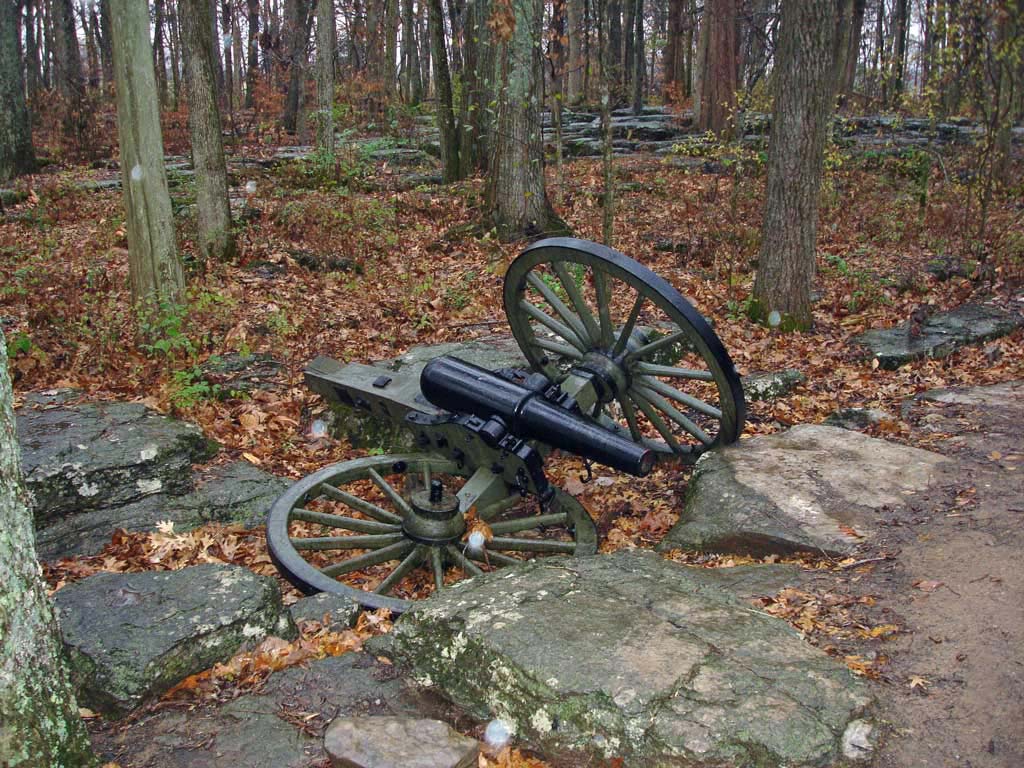
The most famous “Come and Take It” story belongs to Texas. In the 1830s Texas was still part of Mexico, and the town of Gonzales was the heart of Green DeWitt’s colony on the Guadalupe River. Early in the decade, Mexican authorities had loaned the settlers a small cannon to help defend the town against raids.
By 1835 tensions were rising fast. President Antonio López de Santa Anna had set aside the federal Mexican Constitution of 1824 and was gathering power in Mexico City, and many Texians believed their rights as citizens were being taken from them. That September, Colonel Domingo de Ugartechea, the Mexican commander at San Antonio de Béxar, ordered the Gonzales cannon returned. The colonists refused.
On September 27, 1835, Ugartechea sent Lieutenant Francisco de Castañeda and about 100 dragoons to retrieve the gun, with instructions to avoid bloodshed if he could. When Castañeda reached the river on September 29, only about eighteen men of Gonzales stood ready to meet him. Remembered today as the “Old Eighteen,” they bought time by telling him the town’s alcalde (mayor) was away, while riders hurried out to call volunteers from the surrounding settlements. To keep the cannon out of Mexican hands, the colonists buried it.
The Women Who Made the Flag of Gonzales
While the men gathered, the women of Gonzales made a banner. According to tradition, Sarah Seely DeWitt, wife of colony founder Green DeWitt, and her daughter Evaline cut the cloth from a white dress. One account says it was the wedding dress of another daughter, Naomi. On it they painted a black cannon, a single star, and the words COME AND TAKE IT. No original flag survives, so modern versions are based on descriptions, but the spirit is unchanged: a plain white field, a cannon and a dare.
October 2, 1835: The First Shot of the Texas Revolution
By October 1, roughly 150 volunteers had arrived and elected John Henry Moore as their colonel. They dug up the cannon, mounted it on a makeshift carriage and loaded it with scrap iron. That night they crossed the Guadalupe, and early on the morning of October 2, in a heavy fog, they advanced on Castañeda’s camp on the Ezekiel Williams farm, several miles upriver from town.
When the fog lifted, Moore and Castañeda met between the lines. Castañeda explained that his orders were to take the cannon peacefully. Moore replied that the colonists were defending the Constitution of 1824 and invited the Mexican officer to join their cause. Castañeda, a soldier bound by his orders, declined. As the meeting ended, the Texians fired their little cannon beneath the white banner, and after a brief exchange the dragoons withdrew toward San Antonio. Two Mexican soldiers were killed. The only Texian injury, according to the old story, was a bloody nose suffered in a fall from a horse.
“The Lexington of Texas”
The fight at Gonzales was small, but it was the spark that lit the Texas Revolution. Within days Texians captured the presidio at Goliad (October 10, 1835) and soon laid siege to San Antonio. Gonzales earned the name “Lexington of Texas,” and the town later sent the only reinforcements to reach the Alamo: the 32 men of the Gonzales Ranging Company, who rode through the lines on March 1, 1836. Seven weeks later, on April 21, 1836, Sam Houston’s army won Texas independence at San Jacinto.
The fate of the original cannon is still debated. A small cannon displayed at the Gonzales Memorial Museum is believed by many to be the very gun of 1835, though historians continue to argue the point.
Why “Come and Take It” Still Flies
From Leonidas to John McIntosh to the Old Eighteen, the message has always been the same: free people will defend what is theirs. That is why the Gonzales flag remains one of the most popular historic flags in Texas and throughout the South. Southerners know that spirit well. It is the same independence that runs through Southern history, from the Bonnie Blue Flag and the Republic of West Florida to Dick Dowling’s Texans at Sabine Pass.
Frequently Asked Questions
What does “Come and Take It” mean?
It is a dare to anyone demanding that you surrender your weapons or property: if you want it, you will have to come and take it. It is the English form of the ancient Greek phrase molon labe.
Where did the phrase “Come and Take It” come from?
Plutarch credits it to King Leonidas of Sparta at Thermopylae in 480 BC. Colonel John McIntosh used it at Fort Morris, Georgia, in 1778, and the Texians of Gonzales made it famous in 1835.
What is on the original Come and Take It flag?
The Gonzales flag had a white field with a black cannon, a single star and the words “Come and Take It.” No original survives, so today’s flags follow historical descriptions.
Who made the Gonzales Come and Take It flag?
Tradition credits Sarah Seely DeWitt and her daughter Evaline, who made it from a white dress in the days before the battle.
What was the first battle of the Texas Revolution?
The Battle of Gonzales, fought on October 2, 1835, is considered the first battle of the Texas Revolution.
What does molon labe mean in English?
Molon labe is Greek for “come and take [them].” According to Plutarch, it was Leonidas’s reply when Xerxes demanded the Spartans lay down their arms.
Is the Gonzales cannon still around?
A small cannon at the Gonzales Memorial Museum is widely believed to be the original, though historians still debate whether it is the same gun fired in 1835.
Fly the Flag of Gonzales
Honor the Old Eighteen with our Gonzales Come and Take It Cannon Flag or the bold Black Come and Take It Flag. Salute the Spartans with the Molon Labe Embroidered Flag, and remember Texas independence with the San Jacinto Battle Flag.
Thanks for reading. Please share our posts with your friends and family so they too can learn more about Southern Heritage and History.
Brought to you by: Ultimate Flags