
 BUY Rebel Flags For Sale
Some of the best stories from the Civil War have nothing to do with generals or grand strategy. They come from privates who saw the funny side of a terrible war. Sam Watkins of the 1st Tennessee Infantry was one of the best of these storytellers, and two of his favorite tales are about mules he met during his first big battle, Shiloh, in April 1862.
Here are both stories, along with the history of the battle and the hard retreat to Corinth, Mississippi, that gave them their setting.
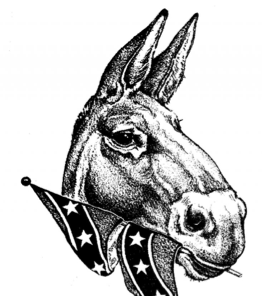
Sam Watkins and the 1st Tennessee
Samuel Rush Watkins (1839–1901) of Maury County, Tennessee, enlisted in 1861 in the Maury Grays, Company H of the 1st Tennessee Infantry. The regiment spent its first year in the mountains of western Virginia, then was sent home to the Western Theater after Federal armies broke into Tennessee in early 1862. Watkins served until the very end of the war and was one of only seven men left in his company when the Army of Tennessee surrendered in April 1865.
In 1882 he published his memoir, “Co. Aytch,” Maury Grays, First Tennessee Regiment; or, A Side Show of the Big Show. He called himself a “high private” and wrote about the everyday life of the common soldier, often with a wink. Both mule stories appear in his chapter on Shiloh.
The Battle of Shiloh, April 6–7, 1862
After the fall of Forts Henry and Donelson in February 1862, General Albert Sidney Johnston pulled the Confederate forces in the West back to the railroad junction at Corinth, Mississippi. General Ulysses S. Grant’s Union army camped about 20 miles away at Pittsburg Landing on the Tennessee River, waiting for General Don Carlos Buell’s army to join it.
Johnston decided to strike first. At dawn on Sunday, April 6, about 44,000 Confederates burst out of the woods near a little log meeting house called Shiloh Church and surprised Grant’s camps. The fighting raged all day. Union troops held out for hours at a sunken road and thicket later called the “Hornet’s Nest.” In the afternoon, Johnston was struck in the leg and bled to death, the highest-ranking officer killed in the war. General P.G.T. Beauregard took command and halted the attack as darkness fell.
Watkins remembered that halt with bitterness. His regiment had driven the enemy and was full of fight, and the order to stop “turned victory into defeat,” as he saw it. That night, Buell’s fresh troops crossed the river, and on Monday, April 7, the combined Union armies counterattacked. By mid-afternoon Beauregard realized he was badly outnumbered and ordered a retreat to Corinth.
Shiloh was the bloodiest battle in American history up to that time. Union losses were about 13,047 killed, wounded and missing, and Confederate losses were about 10,694. More Americans fell in those two days than in all of the nation’s earlier wars combined.
Story One: “It Arn’t Me, Boys, It’s This Blarsted Old Mule”
The first story comes from the Confederate charges on Sunday. Watkins told of a courier whose horse had been killed. The man climbed onto a captured mule just before the last charge, and the mule took off straight toward the Union line, with the courier alone out in front of everyone. The soldiers watching thought they were seeing a hero.
“Just look at that brave man, charging right in the jaws of death.” He began to seesaw the mule and grit his teeth, and finally yelled out, “It arn’t me, boys, it’s this blarsted old mule. Whoa! Whoa!”
Anyone who has ever ridden a mule knows that a mule goes where it wants to go. The courier’s “bravery” was entirely the mule’s idea.
Story Two: The Mule That Would Not Cross the Creek
On Monday morning, as the Confederate army began to fall back, Watkins captured a mule of his own. It was, he wrote, “not a fast mule,” and it seemed to think it knew as much as he did. If Watkins wanted to go to one side of the road, the mule wanted to go to the other. He tried a hickory stick, a rock in its ear and a twister on its nose. The mule only flopped its ears. Watkins joked that he would gladly have split the difference if he could have gotten half of the mule’s “no.”
The two of them “worried along” until they reached a creek, and the mule refused to cross. Then an artillery driver came along with a caisson and offered to help. He tied a heavy two-inch rope around the mule’s neck and the other end to the caisson and whipped up the team. Watkins described what happened next:
“The mule was loth to take to the water. He was no Baptist, and did not believe in immersion, and had his views about crossing streams, but the rope began to tighten… The rope, however, was stronger than the mule’s ‘no,’ and he was finally prevailed upon by the strength of the rope to cross the creek.”
On the far bank the mule shook itself and seemed to be in deep thought. When Watkins climbed back on, it suddenly perked up its ears, gave a little squeal and broke into a gallop, then a run. “He seemed all at once to have remembered or to have forgotten something,” Watkins wrote, and no amount of pulling could stop him “until he brought up with me at Corinth, Mississippi.”
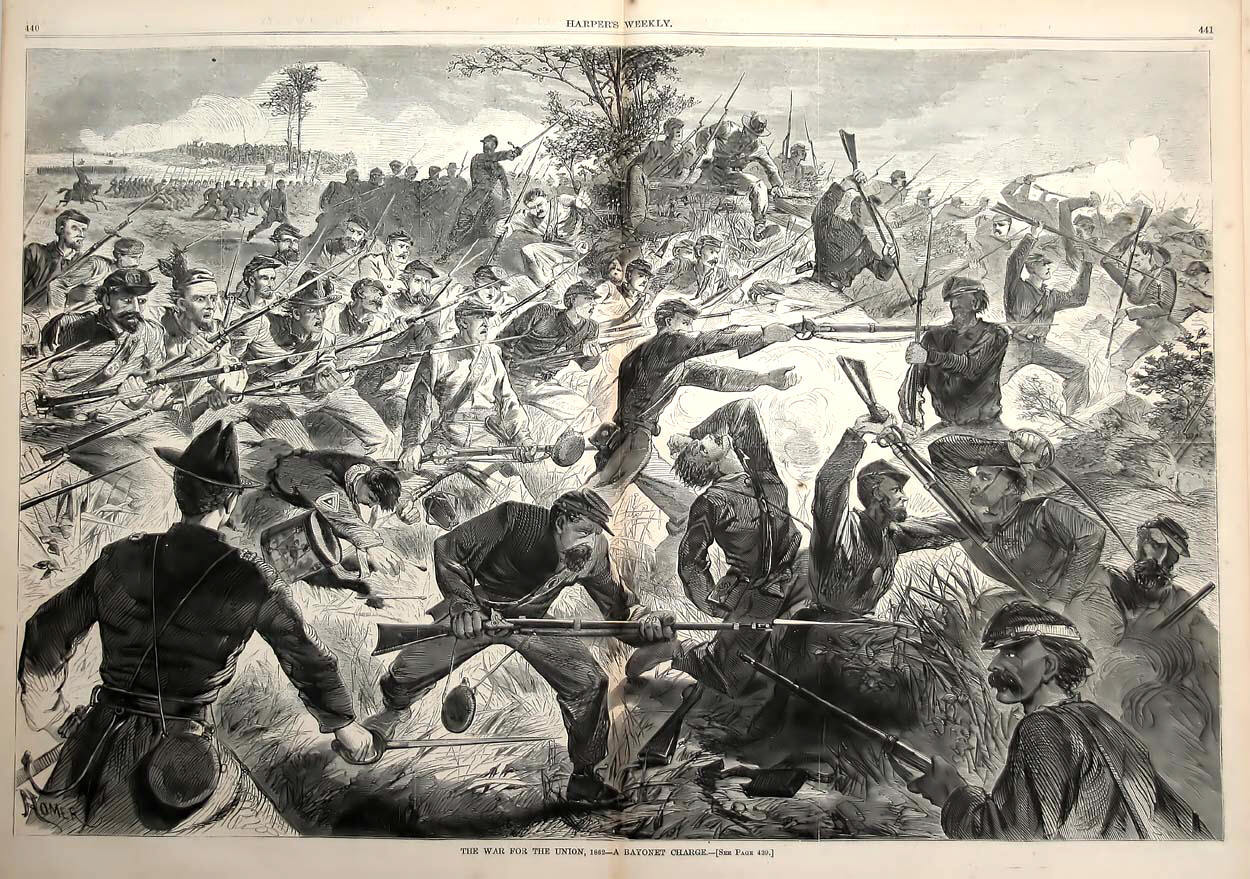
The Hard Road Back to Corinth
The retreat from Shiloh was miserable for most of the army. Rain turned the roads to mud, and wagons full of wounded men jolted south toward Corinth. The town soon became one huge hospital. Watkins wrote that sickness swept the camps there and that water came from “filthy pools.” Many soldiers had enlisted for twelve months and were angry when the new Confederate conscription law of April 1862 kept them in the army.
The Union armies under General Henry Halleck slowly advanced on Corinth, and on the night of May 29–30, 1862, Beauregard quietly evacuated the town. Watkins’s regiment moved on to Tupelo, where more misadventures were waiting, including the raid described in Sam Watkins and the Corn Patch Raid at Tupelo.
Why the Army Needed Its Mules
Behind the jokes is a real piece of history. Both armies depended on mules to haul supply wagons, ambulances and sometimes artillery. Mules were tougher than horses on poor feed and rough roads, which made them valuable to the often hungry Confederate armies. A captured mule was a prize, even a stubborn one. For a tired infantryman, any mule beat walking.
Watkins ended his own reflections with a shrug of respect. A mule may be stubborn, but stubbornness is not always a bad quality. Many people would say the same about the Confederate soldiers who kept fighting long after the odds had turned against them.
Frequently Asked Questions
What is the Sam Watkins mule story?
In Co. Aytch, Sam Watkins describes capturing a stubborn mule at Shiloh that refused to cross a creek. An artillery crew dragged it across with a rope, and then it ran all the way to Corinth, Mississippi.
When was the Battle of Shiloh?
The Battle of Shiloh was fought on April 6–7, 1862, near Pittsburg Landing in southwestern Tennessee. It ended with the Confederate army retreating to Corinth, Mississippi.
How many soldiers died at Shiloh?
About 3,500 men were killed outright, and total casualties reached roughly 23,700. Union losses were about 13,047 and Confederate losses about 10,694.
Who was killed at the Battle of Shiloh?
The most famous loss was General Albert Sidney Johnston, commander of the Confederate army, who was mortally wounded on April 6, 1862. General P.G.T. Beauregard then took command.
Why did the Confederates retreat to Corinth after Shiloh?
Union General Don Carlos Buell’s army reinforced Grant overnight, giving the Federals a large advantage in numbers. Beauregard ordered the retreat on the afternoon of April 7 to save the army.
Did the 1st Tennessee fight at Shiloh?
Yes. Sam Watkins wrote that Shiloh was the first big battle his regiment fought in, after spending 1861 in western Virginia.
Fly the Flags of the Western Army
Remember Sam Watkins and the boys of the Maury Grays with our Tennessee State Flag, or fly the early-war Stars and Bars First National Flag. For more Southern banners, browse all of our Rebel Flags. And for another Watkins adventure, read Sam Watkins Goes AWOL Down the Duck River.
Thanks for reading. Please share our posts with your friends and family so they too can learn more about Southern Heritage and History.
Brought to you by: Ultimate Flags