
 BUY Rebel Flags For Sale
Ask most Americans to name the great battles of the Civil War and you will hear Gettysburg, Antietam and Shiloh. Few will mention Perryville. Yet the men who fought there never forgot it. Private Sam Watkins of the 1st Tennessee, who fought in nearly every major battle of the Army of Tennessee, wrote that he did not remember “a harder contest and more evenly fought battle than that of Perryville.”
Fought on October 8, 1862, in the rolling Chaplin Hills of Boyle County, Kentucky, Perryville was the largest battle ever fought in the Bluegrass State and the high-water mark of the Confederacy in the West.
Bragg’s Kentucky Campaign
In the summer of 1862, General Braxton Bragg moved his Army of Mississippi from Tupelo to Chattanooga by rail, a remarkable journey of about 776 miles through Mobile and Atlanta. From there Bragg and Major General Edmund Kirby Smith launched a bold invasion of Kentucky, hoping to bring the divided border state into the Confederacy and draw thousands of Kentuckians into Southern ranks.
By early October, Kirby Smith had taken Lexington and the Confederates had installed a provisional governor at Frankfort. The Union Army of the Ohio under Major General Don Carlos Buell marched out of Louisville to stop them, nearly 55,000 men strong.
A Drought, a Creek and a Collision
The fall of 1862 brought a severe drought to central Kentucky. Creeks and wells ran dry, and soldiers on both sides were desperate for water. The pools along Doctor’s Fork and the Chaplin River near the crossroads town of Perryville drew both armies together. Skirmishing broke out over the water on Peters Hill on October 7 and again at dawn on October 8.
Bragg believed he faced only part of Buell’s army. In fact he had roughly 16,000 men against a Union force more than three times larger. But because of the terrain, an odd effect called an “acoustic shadow” that kept Buell from hearing the battle at his headquarters only a few miles away, and slow communication, only one of Buell’s three corps, Major General Alexander McCook’s I Corps, carried most of the fighting. About 22,000 Union troops were seriously engaged.
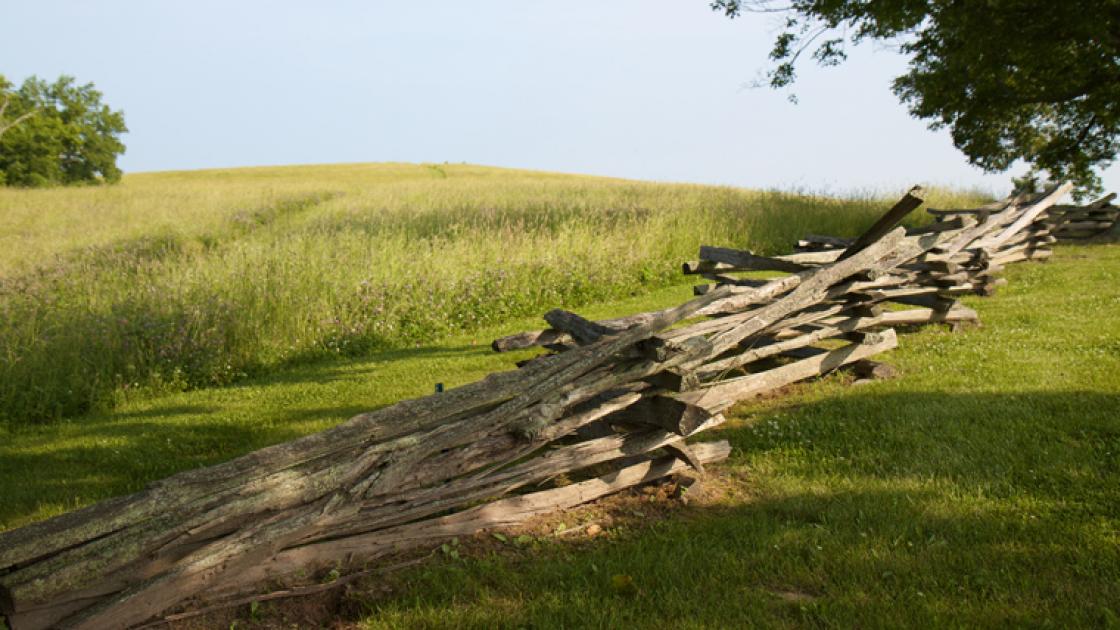
Cheatham’s Attack and Maney’s Brigade at Open Knob
Shortly after noon, Major General Benjamin F. Cheatham’s Tennessee division crossed the dry bed of Doctor’s Fork and struck the Union left flank. Brigadier General Daniel Donelson’s brigade went in first, and the 16th Tennessee took terrible losses.
To relieve them, Brigadier General George Maney sent in his brigade: the 1st, 6th, 9th and 27th Tennessee and the 41st Georgia, about 1,500 men. Their target was Open Knob, a bare hill held by Union Brigadier General William R. Terrill’s brigade and Lieutenant Charles Parsons’ eight-gun battery. Parsons’ guns blasted the Confederates at close range with canister. Maney’s men took cover behind a rail fence, swept the crest with musketry, then rose and charged with the bayonet. They overran the battery, and Terrill’s brigade broke.
Both sides lost generals that afternoon. Union Brigadier Generals James S. Jackson and William R. Terrill were killed in the fighting on this part of the field. Maney’s regiments pressed on through a cornfield toward the next Union line, where Colonel John C. Starkweather’s brigade held a ridge behind a stone wall.
“It Was Death to Retreat Now”
Sam Watkins was in the thick of it with Company H. He remembered how the two sides seemed to be eyeing each other all morning, until about noon the enemy “opened their war dogs upon us” and the whole line became “a solid sheet of blazing smoke and fire.” Then his company ran into Union artillery:
“We did not recoil, but our line was fairly hurled back by the leaden hail that was poured into our very faces… It was death to retreat now to either side.”
The fighting became hand to hand. “Such obstinate fighting I never had seen before or since,” Watkins wrote, saying it seemed “the earth itself was in a volcanic uproar.” By the end of the day, according to Watkins, his comrades had helped carry off four Union Napoleon guns, smoothbore cannon that fired 12-pound shot. With his usual humor he added that he did not know which side had whipped, but he knew he had helped bring off those four guns that night.
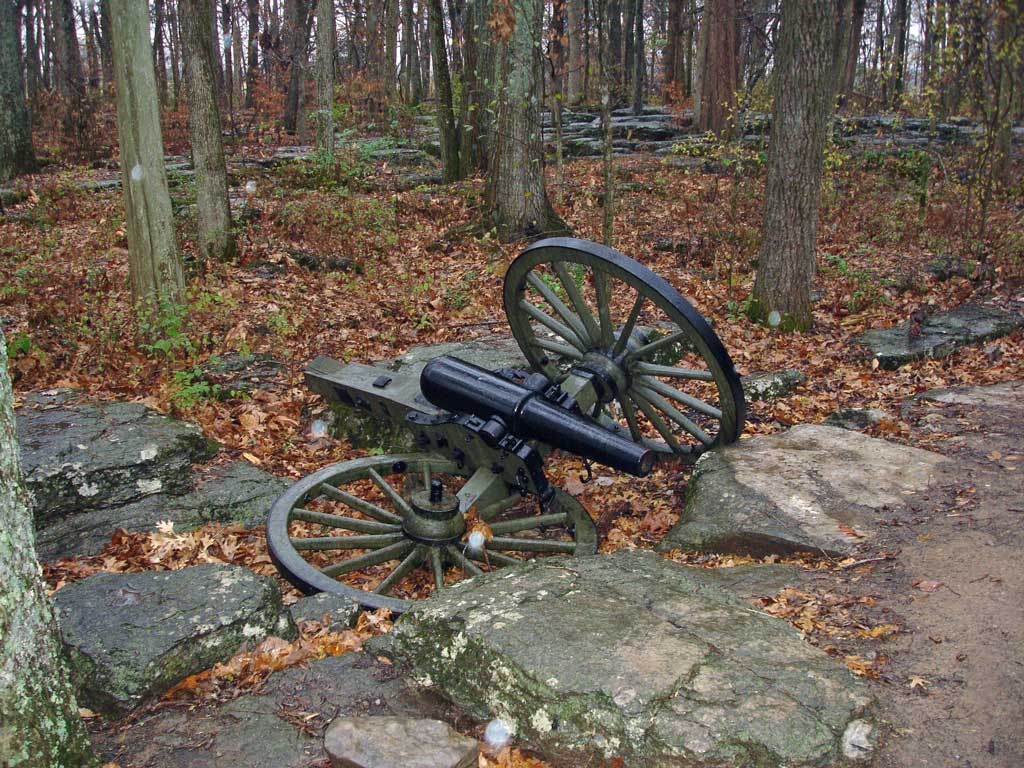
The Cost of Perryville
For the numbers engaged, Perryville was one of the bloodiest battles of the war. The National Park Service estimates about 4,211 Union and 3,396 Confederate casualties, more than 7,600 men killed, wounded or missing in a single afternoon and evening. Some of Maney’s regiments lost about half their men; the 9th Tennessee lost 189 of 378 engaged, and the 16th Tennessee in Donelson’s brigade lost 219 of about 370.
General Bragg’s official report summed it up: “For the time engaged it was the severest and most desperately contested engagement within my knowledge.” Nearly every home, church and barn within miles became a field hospital.
Victory on the Field, Retreat From Kentucky
By nightfall the outnumbered Confederates had driven McCook’s corps back more than a mile, a clear tactical success. But Bragg now realized he faced Buell’s entire army. Short on men and supplies, he withdrew that night to Harrodsburg, joined Kirby Smith and then retreated through Cumberland Gap into East Tennessee. Kentucky stayed in Union hands for the rest of the war, and no Confederate army ever invaded the state in such force again.
Watkins and the 1st Tennessee would fight again at Murfreesboro only weeks later. Follow his story in the Stubborn Mule of Shiloh and his narrow escape in “A Minnie Ball Passes Through My Bible”.
Frequently Asked Questions
Who won the Battle of Perryville?
The Confederates won a tactical victory by driving back the Union left, but Bragg withdrew that night because he faced a much larger army. The result was a strategic Union success that kept Kentucky in Federal hands.
When was the Battle of Perryville?
The main battle was fought on October 8, 1862, near Perryville in Boyle County, Kentucky, after skirmishing over water on October 7.
How many soldiers died at Perryville?
Total casualties were about 7,600. Centre College historians count about 1,422 killed in action, and about 2,377 men lost their lives when those who later died of wounds are included.
Why is Perryville called the high-water mark of the Confederacy in the West?
Perryville was the farthest north a major Confederate army fought in the Western Theater. After Bragg’s retreat, Confederate forces never again came so close to winning Kentucky.
What did Sam Watkins say about Perryville?
Watkins called Perryville the hardest and most evenly fought battle he experienced, describing “obstinate fighting” that seemed to put the earth itself “in a volcanic uproar.”
Who commanded at the Battle of Perryville?
General Braxton Bragg commanded the Confederate Army of Mississippi, and Major General Don Carlos Buell commanded the Union Army of the Ohio.
Can you visit the Perryville battlefield?
Yes. Perryville Battlefield State Historic Site near Perryville, Kentucky, preserves much of the field, including Open Knob, with walking trails, monuments and a museum.
Honor the Army of Tennessee
Honor Cheatham’s Tennesseans with a Polk Battle Flag, the pattern associated with Polk’s corps of the Army of Tennessee, or a Hardee Flag of the Army of Tennessee. You can also fly a Tennessee Flag or browse all of our Civil War Flags.
Thanks for reading. Please share our posts with your friends and family so they too can learn more about Southern Heritage and History.
Brought to you by: Ultimate Flags