

 BUY Rebel Flags For Sale
On the afternoon of July 2, 1863, the second day of the Battle of Gettysburg, the men of Hood’s Texas Brigade climbed into some of the hardest fighting of the entire war. Their objective was a rocky, half-cleared hill at the southern end of the Union line that history now calls Little Round Top. Among them was Corporal John W. Stevens of Company K, 5th Texas Infantry. Stevens survived the war, became a judge in Hill County, Texas, and in 1902 published his Reminiscences of the Civil War. His memory of that afternoon, and of the moment a Union officer ordered him to “behave” himself, gives us a rare soldier’s-eye view of the fight for Little Round Top.

Hood’s Texas Brigade Comes to Gettysburg
The Texas Brigade was the only Texas command in Robert E. Lee’s Army of Northern Virginia, and it had already earned a reputation as one of the finest fighting units in the army at Gaines’ Mill, Second Manassas and Sharpsburg. By the summer of 1863 it was led by Brigadier General Jerome B. Robertson and made up of the 1st, 4th and 5th Texas and the 3rd Arkansas, in the division of Major General John Bell Hood in Longstreet’s First Corps.
The 5th Texas was commanded by Colonel Robert M. Powell, an Alabama-born lawyer who had moved to Texas in 1849. When Powell’s men marched into Pennsylvania, he noticed how differently the people there greeted them, describing Chambersburg as a “city of banners.” The regiment reached Gettysburg after a long, hard march and brought about 409 men onto the field.
The Attack on the Union Left, July 2, 1863
Lee’s plan for July 2 called for Longstreet’s corps to strike the Union left flank. Around 4:30 in the afternoon Hood’s division crossed the Emmitsburg Road and advanced toward the Round Tops and the boulder field known as Devil’s Den. Hood was badly wounded in the arm early in the attack, and the division’s regiments spread out across the broken ground. As the Texas Brigade went forward, Colonel Phillip Work of the 1st Texas is said to have pointed to his regiment’s flag and shouted for his men to follow the Lone Star flag to the top of the mountain.
The 3rd Arkansas and 1st Texas fought their way into Devil’s Den, where they helped capture three guns of the 4th New York Battery. The 4th and 5th Texas, alongside Law’s Alabamians, swung to the right and began climbing the western and southern slopes of Little Round Top.
Little Round Top: Rocks, Trees and Union Steel
Only minutes before the Texans arrived, the hill had been nearly empty of Union infantry. Brigadier General Gouverneur K. Warren, Meade’s chief engineer, spotted the danger, and Colonel Strong Vincent rushed his brigade to the crest. Vincent placed the 16th Michigan on the western slope, then the 44th New York, the 83rd Pennsylvania and, at the far southern end, the 20th Maine under Colonel Joshua L. Chamberlain.
The old story that the Texans fought the 20th Maine is a common mistake. Chamberlain’s famous fight was against the 15th and 47th Alabama. The 4th and 5th Texas struck the other end of Vincent’s line, the 44th New York and the 16th Michigan. The Texans came close to breaking through the 16th Michigan, and only the timely arrival of the 140th New York, part of Brigadier General Stephen Weed’s brigade, held the Union right on the hill.
Corporal Stevens later remembered the strange calm he felt in the middle of the fury. The enemy was only 25 or 30 paces away and the bullets were flying thick around him, yet, he wrote, his only fear was that his own comrades behind him “might begin firing too soon and shoot us in the back.” He added that “it had never occurred to me that there was any danger of being captured, or that we would not whip the fight.”

“Throw Down My Gun and Behave Myself”
The Texans charged the hill again and again. In the smoke and confusion among the rocks, Stevens and a group of his comrades pushed so far forward that Union troops closed in behind them. He described what came next in words that have been quoted by historians ever since:
“Just then a slap on my back with a sword and an order to throw down my gun and behave myself, came like a sudden clap of thunder. As I looked around, the woods behind me were full of Yankees.” Corporal John W. Stevens, 5th Texas Infantry
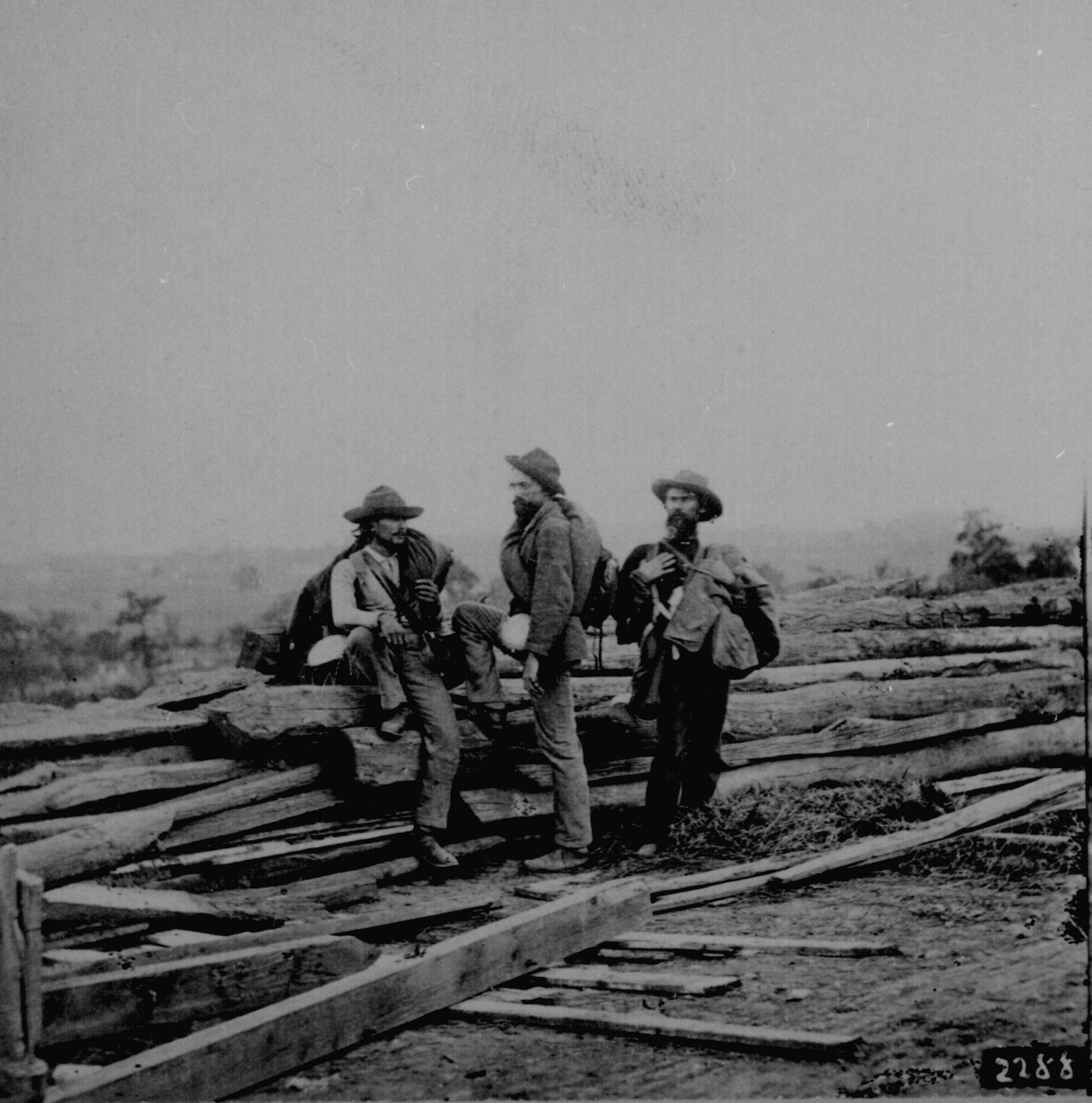
Surrounded, Stevens unbuckled his cartridge belt and became a prisoner of war along with other men in gray. Yet the Union officer who took charge of the captives paid them a soldier’s compliment. As Stevens recalled it, the officer told them that if they had on the proper uniform and were organized into a regiment under his command, he “should feel that I was in command of a body of men that I could depend on anywhere.” Coming from an enemy who had just watched them charge Little Round Top, it was high praise indeed.
The Cost to the Texas Brigade
The fight for Little Round Top lasted until dark. The 4th and 5th Texas could not take the crest, and the brigade fell back to a position near Devil’s Den, where it held through July 3. Colonel Powell was wounded near the summit and captured, and he spent much of the rest of the war at the Johnson’s Island prison camp in Ohio. One account puts the 5th Texas losses at 54 killed, 112 wounded and 45 missing or captured, and the Texas Brigade as a whole suffered about 597 casualties at Gettysburg.
The Texas Brigade would go on to fight at Chickamauga, the Wilderness and through the siege of Petersburg to Appomattox. Today a State of Texas monument stands on the Gettysburg battlefield near where the brigade began its advance, honoring the Texans who climbed those slopes.
Frequently Asked Questions
Did Texas troops fight at Little Round Top?
Yes. The 4th and 5th Texas of Hood’s Texas Brigade attacked the western and southern slopes of Little Round Top on July 2, 1863, alongside Alabama regiments of Law’s brigade.
Who did the 5th Texas fight at Little Round Top?
The 5th Texas fought mainly against the 44th New York and the 16th Michigan of Strong Vincent’s brigade, with the 140th New York arriving to reinforce the Union line.
Did the 20th Maine fight the Texans at Gettysburg?
No. The 20th Maine held the far southern end of Little Round Top and fought the 15th and 47th Alabama, not the Texas regiments.
Who was John W. Stevens of the 5th Texas?
John W. Stevens was a corporal in Company K, 5th Texas Infantry, who was captured at Gettysburg. He later became a judge in Hill County, Texas, and published his memoirs in 1902.
How many men did the 5th Texas bring to Gettysburg?
The regiment brought about 409 men and suffered heavy losses on July 2, including its colonel, Robert M. Powell, who was wounded and captured.
Who commanded the Texas Brigade at Gettysburg?
Brigadier General Jerome B. Robertson commanded the brigade, which belonged to Major General John Bell Hood’s division of Longstreet’s corps.
Fly the Colors of Hood’s Texans
For more Lone Star courage, read Christmas Picket on the Potomac: Val Giles and the 4th Texas and The Battle of Sabine Pass, or see how another Southern regiment saved its colors at Gettysburg in Civil War Color Bearers. Honor the Texas Brigade with our 5th Texas Infantry Hood’s Brigade Flag, the 1st Texas Infantry Regiment Flag, the Texas Flag or the Confederate First National 13 Stars and Bars Flag.
Thanks for reading. Please share our posts with your friends and family so they too can learn more about Southern Heritage and History.
Brought to you by: Ultimate Flags