
Some of the most famous words in American military history were not a speech or a battle cry. They were a single word, typed in the middle of a sheet of paper and handed to a German officer in the snow outside Bastogne, Belgium. On December 22, 1944, with the 101st Airborne Division surrounded and outnumbered, Brigadier General Anthony McAuliffe answered a demand to surrender with one word: “NUTS!” Here is the story behind that legendary reply.

The Battle of the Bulge Begins
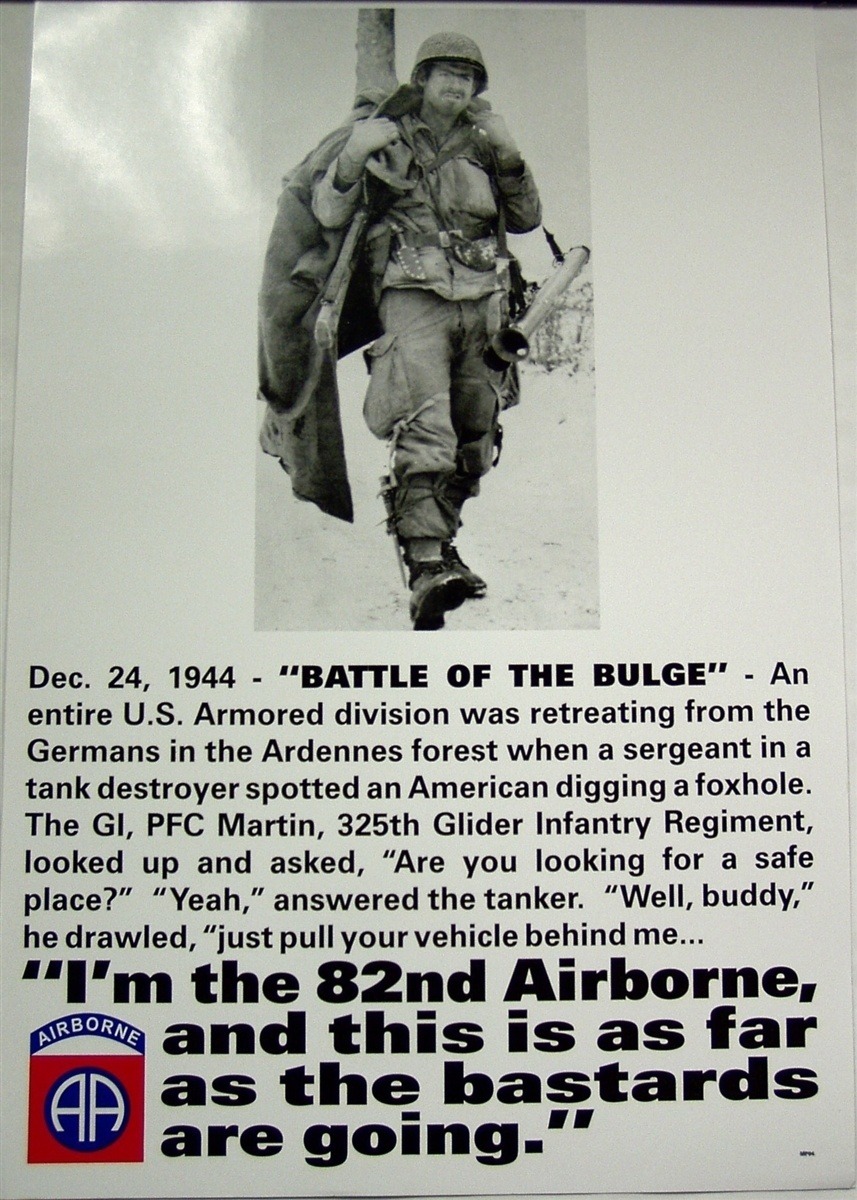
On December 16, 1944, Hitler launched his last great offensive in the West. More than 200,000 German troops struck a thinly held stretch of the American line in the Ardennes forest of Belgium and Luxembourg, hoping to split the Allied armies and drive all the way to the port of Antwerp. The attack punched a huge “bulge” into the Allied front, and that is how the Battle of the Bulge got its name.
In the middle of the Ardennes sat the small market town of Bastogne. All seven main roads in the region ran through it. Whoever held Bastogne controlled the roads German tanks needed to keep their offensive moving.
The 101st Airborne Rushes to Bastogne
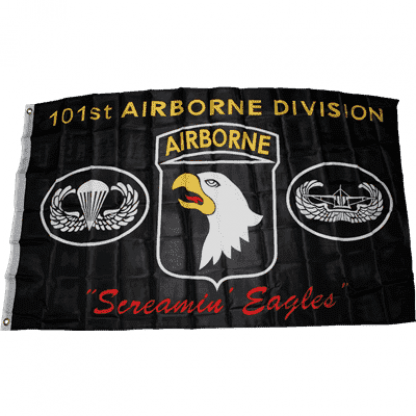
The 101st Airborne, the “Screaming Eagles,” was resting in France after months of hard fighting in Normandy and Holland. The men were short of winter clothing, ammunition and equipment. They were loaded onto open trucks anyway and rushed to Bastogne, arriving on December 18 and 19 to join armored troops from the 10th Armored Division’s Combat Command B and other units already fighting there.
The division’s commander, Major General Maxwell Taylor, was in the United States attending a staff conference. That left the division artillery commander, Brigadier General Anthony C. McAuliffe, in charge. By December 20 the Germans had cut the roads into Bastogne, and by the next night the Americans were completely surrounded, outnumbered by roughly five to one.
The German Ultimatum
Late in the morning of December 22, four Germans carrying a white flag approached the American lines southeast of town, held by Company F, 2nd Battalion, 327th Glider Infantry. According to most accounts, the party included two officers, Major Wagner and Lieutenant Hellmuth Henke. They carried a typed message from the commander of the German XLVII Panzer Corps, General Heinrich von Lüttwitz.
The message was blunt. It said the Americans were encircled and gave them two hours to surrender “the encircled town.” If they refused, it warned, a German artillery corps and six heavy antiaircraft battalions stood ready to annihilate the U.S. troops in and near Bastogne.
“Aw, Nuts!”
The German officers were blindfolded and held at a company command post while their message was carried back to division headquarters. When a staff officer, Lieutenant Colonel Ned Moore by most accounts, told McAuliffe the Germans wanted the Americans to surrender, the general reportedly laughed and said, “Aw, nuts!” and went off to visit troops on the line.
When he returned, the Germans were still waiting for a formal written reply, and McAuliffe was stumped about what to say. His operations officer, Lieutenant Colonel Harry Kinnard, suggested that his first reaction would be hard to beat. The other officers agreed. McAuliffe wrote out the reply and had it typed up:
To the German Commander,
N U T S !
The American Commander
Colonel Joseph Harper, commander of the 327th Glider Infantry, personally delivered the note to the German officers. When they asked what it meant, Harper put it in plain English: it meant “Go to hell.” He added that if they kept attacking, the Americans would kill every German who tried to break into the city.
Holding the Line Until Help Arrived
The threatened artillery barrage never came in the force the Germans promised, but the fighting around Bastogne was brutal. The defenders fought in frozen foxholes with too little food, ammunition and medical supplies. On December 23 the skies finally cleared, and Allied aircraft began dropping supplies to the trapped garrison and hammering German positions. On Christmas Eve, German bombers struck the town, and on Christmas Day German tanks and infantry launched a major assault that the paratroopers and tankers beat back.
Meanwhile, General George S. Patton swung his Third Army north to break through to Bastogne. Late in the afternoon of December 26, a Sherman tank named Cobra King from the 4th Armored Division broke through the German ring and made contact with the defenders, around 4:50 p.m. The siege of Bastogne was over, though hard fighting around the town would continue into January.
The stand cost the 101st Airborne about 341 killed, 1,691 wounded and 516 missing between December 19 and January 6. Patton awarded McAuliffe the Distinguished Service Cross on December 30, 1944, and the defenders of Bastogne became known as the “Battered Bastards of Bastogne.”
What Happened to Anthony McAuliffe?
McAuliffe was born in Washington, D.C., on July 2, 1898. After Bastogne he commanded the 103rd Infantry Division and went on to a distinguished postwar career, eventually earning his fourth star and commanding U.S. Army Europe before retiring in 1956. He died on August 10, 1975, and is buried in Arlington National Cemetery. To this day, Bastogne’s main square is called McAuliffe Square, and the town still celebrates the American “Nuts!”
Frequently Asked Questions
What did General McAuliffe say at Bastogne?
When the Germans demanded his surrender on December 22, 1944, McAuliffe replied with a one-word message: “NUTS!” It was addressed “To the German Commander” and signed “The American Commander.”
What does “Nuts” mean in McAuliffe’s reply?
It was American slang for nonsense or “no way.” Colonel Joseph Harper explained it to the German officers as “Go to hell.”
Why was Bastogne so important in the Battle of the Bulge?
All seven main roads in the Ardennes passed through Bastogne. Holding it denied German armor the road network it needed to push west.
Who was in command of the 101st Airborne at Bastogne?
Brigadier General Anthony McAuliffe, the division’s artillery commander, was acting commander because Major General Maxwell Taylor was in the United States.
When was Bastogne relieved?
The 4th Armored Division of Patton’s Third Army broke through to the defenders on the afternoon of December 26, 1944.
How long was the siege of Bastogne?
The town was encircled from about December 20 to December 26, 1944, although fighting around Bastogne continued into January 1945.
Fly the Colors of the Screaming Eagles
The men of Bastogne showed what American soldiers are made of. Honor them with our 101st Airborne Flag, the U.S. Airborne Flag or the Home of the Free Because of the Brave Flag. For more World War II heroism, read Omaha Beach on D-Day and the story of the 101st’s own Filthy 13.
Thanks for reading! We hope you enjoyed our post. Please share with all your fellow patriots. Brought to you by: Ultimate Flags