
On the morning of June 6, 1944, thousands of young Americans waded ashore on a stretch of Normandy coast code-named Omaha Beach. Of the five Allied landing beaches on D-Day, none was harder or bloodier. Many of the first men off the landing craft never made it past the waterline, and for several hours the invasion there hung in the balance. Yet by nightfall, through sheer grit and small-unit courage, American soldiers had fought their way up the bluffs and opened the door to the liberation of Western Europe. Here is the story of Omaha Beach and the men who won it.
Operation Overlord and the Five Beaches
D-Day was the opening of Operation Overlord, the Allied invasion of Nazi-occupied France under the overall command of General Dwight D. Eisenhower. American, British and Canadian forces landed on five beaches along the Normandy coast. The Americans took the two western beaches, Utah and Omaha, while the British and Canadians landed at Gold, Juno and Sword.
Omaha Beach stretched for about six miles between Port-en-Bessin and the mouth of the Vire River. Planners divided it into sectors with names that veterans would never forget: Charlie, Dog Green, Dog White, Dog Red, Easy Green, Easy Red, Fox Green and Fox Red. Behind the sand rose a band of shingle, a seawall in places, and steep bluffs 100 feet or more high. Only a handful of narrow valleys, called “draws,” led off the beach.
The Defenses of Omaha Beach
Under Field Marshal Erwin Rommel, the Germans had turned the beach into a death trap. Steel obstacles, wooden stakes topped with mines and barbed wire covered the tidal flats. Thirteen fortified strongpoints, known as Widerstandsnester, guarded the draws with machine guns, mortars, artillery and interlocking fields of fire. Allied intelligence also underestimated the defenders: alongside a weaker coastal division, battalions of the veteran German 352nd Infantry Division were manning the bluffs.
The pre-invasion bombing largely missed its targets because of cloud cover, and the short naval bombardment did not silence the strongpoints. When the landing craft came in, the defenses were nearly intact.
H-Hour: The First Waves
The assault began at about 6:30 a.m. The first waves came from two regimental combat teams: the 116th Infantry Regiment of the 29th Infantry Division, a former National Guard outfit from Virginia, Maryland and Pennsylvania, on the western half of the beach, and the 16th Infantry Regiment of the veteran 1st Infantry Division, the “Big Red One,” on the eastern half.
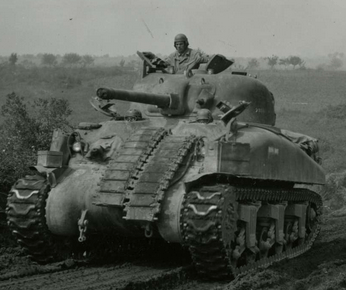
Almost everything went wrong. Rough seas and strong currents pushed many landing craft away from their assigned sectors. On the eastern half of the beach, the amphibious “DD” Sherman tanks of the 741st Tank Battalion were launched far offshore, and of the 29 that set out, only two swam to the beach. Men jumped into chest-deep water under a storm of machine-gun fire, weighed down by heavy packs. Many drowned; many more were cut down on the open sand.
The worst losses fell on Company A of the 116th Infantry at Dog Green. Many of its men came from the small town of Bedford, Virginia. Nineteen of the “Bedford Boys” were killed on D-Day, by most counts the highest loss per capita of any American community. The National D-Day Memorial stands in Bedford today because of that sacrifice.
The Rangers at Pointe du Hoc and Dog White
West of Omaha, three companies of the 2nd Ranger Battalion under Lieutenant Colonel James Earl Rudder landed at the foot of Pointe du Hoc, a cliff about 100 feet high. Using ropes, grappling hooks and ladders, they climbed the cliff under fire to destroy a battery of large guns that threatened both American beaches. At the top they found the guns had been moved inland. Ranger patrols tracked them down and disabled them, then held the point for two days against German counterattacks.
The rest of the 2nd Rangers and the 5th Ranger Battalion landed on Omaha itself. At Dog White, Brigadier General Norman Cota, assistant commander of the 29th Division, walked the beach under fire to get men moving. According to a well-known account, he urged the Rangers forward with the words that became their motto: “Rangers, lead the way!”
Getting Off the Beach
By midmorning the situation looked so grim that General Omar Bradley, watching from offshore, considered diverting later waves to other beaches. But on the sand, small groups of soldiers led by sergeants, lieutenants and a few determined senior officers began to break through. They blew gaps in the wire with Bangalore torpedoes and worked their way up the bluffs between the strongpoints.
Colonel George A. Taylor of the 16th Infantry is remembered for rallying his men with the blunt words, “Two kinds of people are staying on this beach, the dead and those who are going to die.” Navy destroyers then steamed dangerously close to shore to blast German positions at point-blank range. By early afternoon Americans were on the high ground, and the strongpoints began to fall one by one.
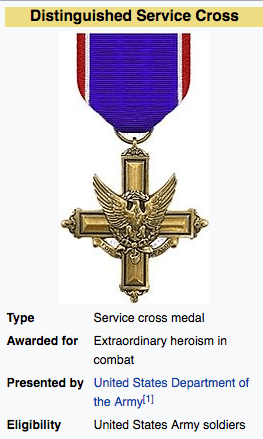
Three men of the 1st Infantry Division earned the Medal of Honor for their actions on Omaha that day: Technician Fifth Grade John J. Pinder Jr., First Lieutenant Jimmie W. Monteith Jr. and Private Carlton W. Barrett. Pinder and Monteith gave their lives.
The Cost of Victory
American casualties at Omaha on June 6 are usually estimated at about 2,400 killed, wounded and missing, far more than at any other D-Day beach. By nightfall about 34,000 troops were ashore, holding a beachhead barely a mile deep, and all five draws were in American hands. The foothold was small, but it held, and within days it joined with the other beaches into a continuous front.
Today the Normandy American Cemetery at Colleville-sur-Mer stands on the bluff above Omaha Beach. More than 9,380 American service members rest there beneath rows of white crosses and Stars of David, looking out over the sand where so many of them fell.
Frequently Asked Questions
Why was Omaha Beach so deadly?
Omaha was backed by high bluffs and defended by strong German positions that the pre-invasion bombing and shelling failed to destroy. Rough seas also scattered the landing craft and sank most of the amphibious tanks meant to support the infantry.
How many Americans died at Omaha Beach?
Total American casualties at Omaha on D-Day are usually estimated at about 2,400 killed, wounded and missing. Exact numbers of dead vary by source.
Which divisions landed at Omaha Beach?
The 1st Infantry Division and the 29th Infantry Division made the main assault, supported by the 2nd and 5th Ranger Battalions, tank battalions and combat engineers.
What time did the landing at Omaha Beach start?
H-Hour at Omaha Beach was about 6:30 a.m. on June 6, 1944, following a short naval bombardment.
Who were the Bedford Boys?
They were soldiers from Bedford, Virginia, who served in Company A of the 116th Infantry. Nineteen of them were killed on D-Day at Omaha Beach, by most counts.
Can you visit Omaha Beach today?
Yes. Visitors can walk the beach, see remains of German bunkers, and visit the Normandy American Cemetery and Memorial at Colleville-sur-Mer and nearby Pointe du Hoc.
Honor the Heroes of D-Day
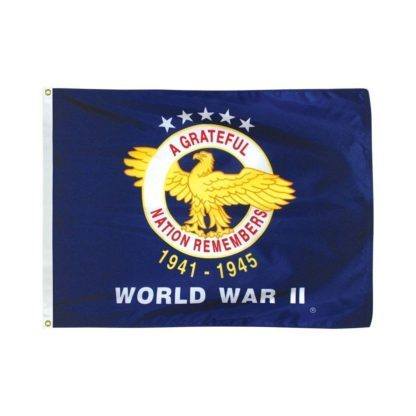
The men who fought at Omaha Beach showed the world what American courage looks like. For more stories of the Greatest Generation, read about The Filthy 13, the paratroopers who jumped into Normandy, and learn how the flag they fought under changed over time in The Evolution of American Flags in History. Honor their service with our World War II Commemorative Flag, fly the 48-Star American Flag they carried ashore, or show your support for the Army with the U.S. Army Star Flag.
Thanks for reading! We hope you enjoyed our post. Please share with all your fellow patriots. Brought to you by: Ultimate Flags