

 BUY Rebel Flags For Sale
In the War Between the States, no job on the battlefield was more honored or more dangerous than carrying the colors. The regimental flag marked where a unit stood, showed the men where to advance, and carried the pride of every company and county that had sent its sons to war. Color bearers knew they would draw the enemy’s fire, and still there was never a shortage of volunteers to pick up a fallen flag. One of the most remarkable stories of devotion to the colors belongs to Sergeant C.S. Clancy of the 1st Louisiana Infantry, who refused to let his regiment’s battle flag fall into enemy hands even after he was captured at Gettysburg.

Why the Regimental Flag Mattered So Much
Civil War battles were fought in thick clouds of gunpowder smoke. Officers’ voices were lost in the roar of musketry and cannon, and in that confusion the flag was the one thing every soldier could see. Men dressed their lines on the colors, followed them forward in an attack and rallied around them when a line broke. A regiment whose flag went down could lose its sense of direction in moments.
The flag also carried a regiment’s honor. Many Southern colors were sewn by the ladies of a hometown and presented to the volunteers before they marched off, and battle honors were painted on them as the war went on. Losing the colors to the enemy was felt as a deep disgrace. On the other side, capturing an enemy flag was considered such a feat that many Union soldiers received the Medal of Honor for it.
The Color Guard: A Job Only for the Bravest
The colors were carried by a color sergeant and protected by a color guard, usually several corporals chosen for steadiness and courage. Their task was simple to describe and terrible to carry out: keep the flag flying and moving forward no matter what. Because the enemy aimed at the flag, the color guard often suffered the heaviest losses of any part of a regiment. When one bearer fell, the next man took up the staff, and in hard fights a flag might pass through a dozen hands in a single afternoon.

Gettysburg produced some of the most famous examples. On July 1, 1863, the 26th North Carolina attacked the Union Iron Brigade at McPherson’s Ridge. The regiment’s colors went down again and again; by most accounts more than ten men were shot carrying them that day, including the young colonel, Henry King Burgwyn Jr., who was mortally wounded with the flag in his hands. When Lieutenant Colonel John R. Lane stepped forward to take it, another officer warned him that “no man can take those colors and live.” Lane raised it anyway and was shot through the neck moments later. The 26th entered the battle with about 843 men and suffered roughly 687 casualties, the heaviest loss of any Confederate regiment at Gettysburg.
The 1st Louisiana Infantry
The 1st Louisiana Infantry was organized in New Orleans on April 28, 1861, under Colonel Albert G. Blanchard, and was sent to Virginia, where it would spend the entire war. From the summer of 1862 it served in the Second Louisiana Brigade of the Army of Northern Virginia, one of the famous “Louisiana Tigers” brigades. The regiment fought at the Seven Days, Second Manassas, Sharpsburg, Fredericksburg and Chancellorsville before marching north into Pennsylvania in the summer of 1863.
At Gettysburg the brigade was commanded by Colonel Jesse M. Williams, because its general, Francis T. Nicholls, had lost his left foot at Chancellorsville that May. The brigade belonged to Edward “Allegheny” Johnson’s division of Richard Ewell’s Second Corps.
The Fight for Culp’s Hill
On the evening of July 2, 1863, Johnson’s division attacked Culp’s Hill, the wooded height that anchored the right end of the Union line. Colonel Williams later reported that the Louisianans moved forward around 7 p.m., drove the Federals back into their breastworks, and then fought for about four hours within roughly 100 yards of the enemy’s entrenchments. The ground was steep, rocky and dark with smoke and nightfall, and the Union works were too strong to carry.
The 1st Louisiana went into the fight with only about 172 men and lost 39 of them. Its commander, Lieutenant Colonel Michael Nolan, was among the dead at Gettysburg. The brigade held its position through the night and renewed the fight at dawn on July 3 before finally withdrawing.
Sergeant Clancy and the Hidden Flag
During the fighting on July 2, the regiment’s color bearer, Fourth Sergeant C.S. Clancy of Company D (his name also appears as Charles S. Clancey), found himself cut off with no way back to his own lines. He was, according to the wartime account, the sixth man to carry the regiment’s colors, which shows how many had already fallen with them. Rather than let the flag be taken as a trophy, Clancy tore it from its staff and hid it under his shirt before he was captured.
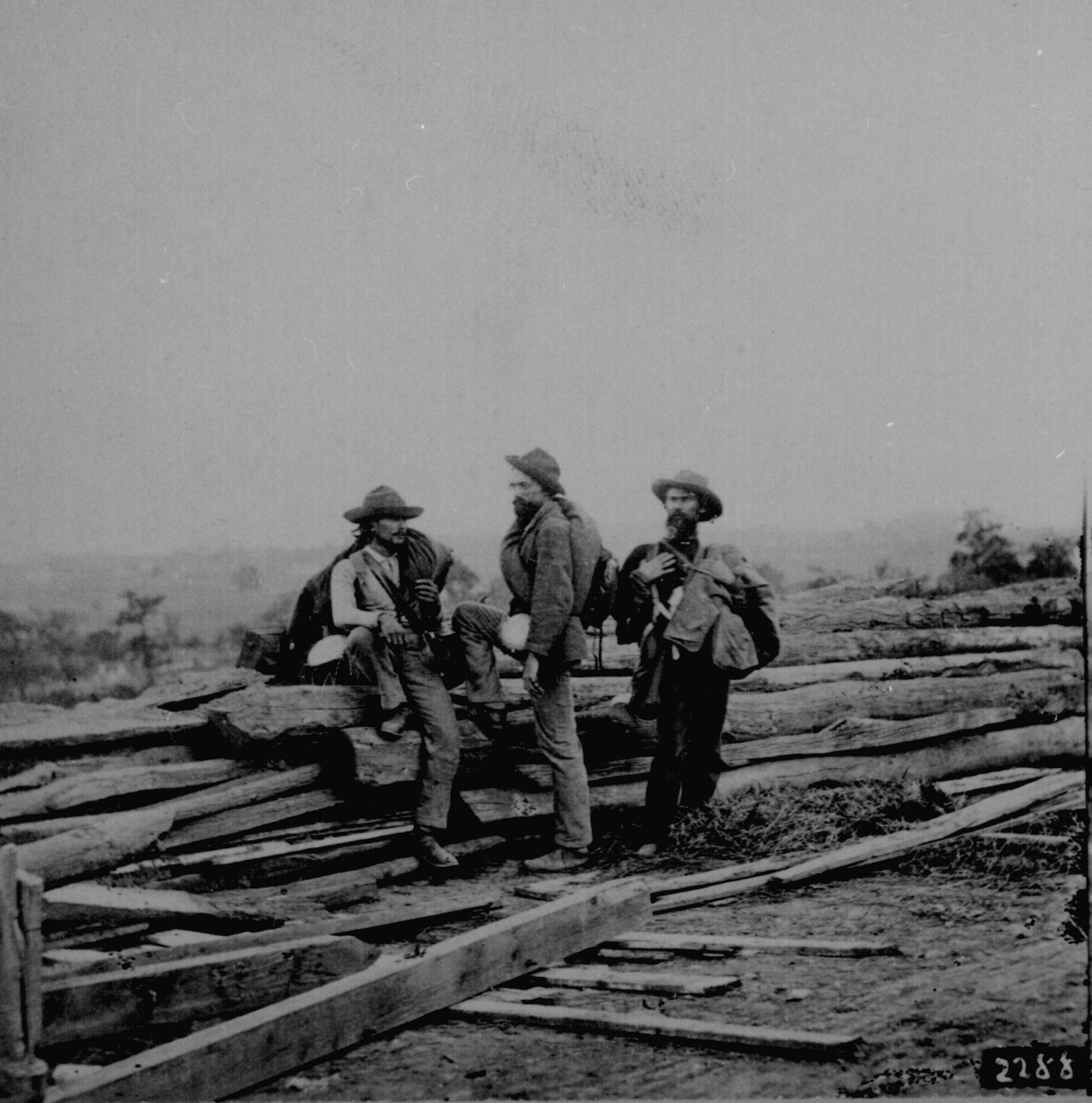
Clancy carried the flag in secret through his imprisonment, first at Fort McHenry in Baltimore and then at Fort Delaware, one of the most feared Union prison camps. He knew that his best chance of bringing it home was to be sent south with the sick and wounded prisoners, so he pretended to be gravely ill and was included among those paroled. When he reached Richmond, he brought out the flag and showed it to his comrades and the public. The Richmond Examiner reported the story in August 1863 and noted that the banner bore about two hundred bullet holes and the marks of shell fire.
Some later retellings say Clancy unveiled the flag in New Orleans. The contemporary newspaper account places it in Richmond, which makes sense, since New Orleans had been under Union occupation since the spring of 1862.
The 1st Louisiana After Gettysburg
The 1st Louisiana kept fighting to the end. It served at Mine Run, the Wilderness and Spotsylvania, marched with Jubal Early to Monocacy and the outskirts of Washington in 1864, fought through the Shenandoah Valley campaign, and endured the long siege of Petersburg. By the surrender at Appomattox in April 1865, the regiment that had left New Orleans with full ranks had only one officer and 18 enlisted men present for duty. Their flag, and the men like Clancy who guarded it, remain a lasting symbol of Louisiana’s sacrifice.
Frequently Asked Questions
What did a color bearer do in the Civil War?
A color bearer carried the regiment’s flag into battle. The flag served as a rallying point and guide for the men, so the bearer had to keep it upright and visible no matter how heavy the fire.
Why were color bearers targeted?
Shooting down the flag could throw an enemy regiment into confusion and break its morale. Capturing a flag was also a great honor, so color bearers drew heavy fire from the other side.
How many men were in a color guard?
A color guard usually consisted of a color sergeant and several corporals. Their job was to protect the flag and take it up immediately if the bearer fell.
What happened to the 1st Louisiana at Gettysburg?
The 1st Louisiana attacked Culp’s Hill on the evening of July 2, 1863, as part of Williams’s (Nicholls’s) brigade. It took about 172 men into the fight and suffered 39 casualties, including its commander, Lt. Col. Michael Nolan.
How did Sgt. Clancy save the 1st Louisiana’s flag?
When he was cut off and captured on July 2, he tore the flag from its staff and hid it under his shirt. He kept it hidden through two Union prisons and revealed it after reaching Richmond as a paroled prisoner.
Which Confederate regiment lost the most men at Gettysburg?
The 26th North Carolina suffered the most casualties of any Confederate regiment at Gettysburg, about 687 of roughly 843 men. Its colors fell more than ten times on July 1 alone.
Honor the Men Who Carried the Colors
The color bearers of the Confederacy gave everything to keep their flags flying. Learn more about them in Color Guard of the Southern Cross: The Men Who Carried the Confederate Battle Flag and No Man Can Take These Colors and Live. You can honor the Louisiana Tigers with our Louisiana Red Battle Flag or the Louisiana Republic Flag, and fly the colors of Lee’s army with our Confederate Infantry Battle Flag.
Thanks for reading. Please share our posts with your friends and family so they too can learn more about Southern Heritage and History.
Brought to you by: Ultimate Flags